Art promotes health
06.10.2020 - Research on Creative Arts Therapies
Research on Creative Arts Therapies
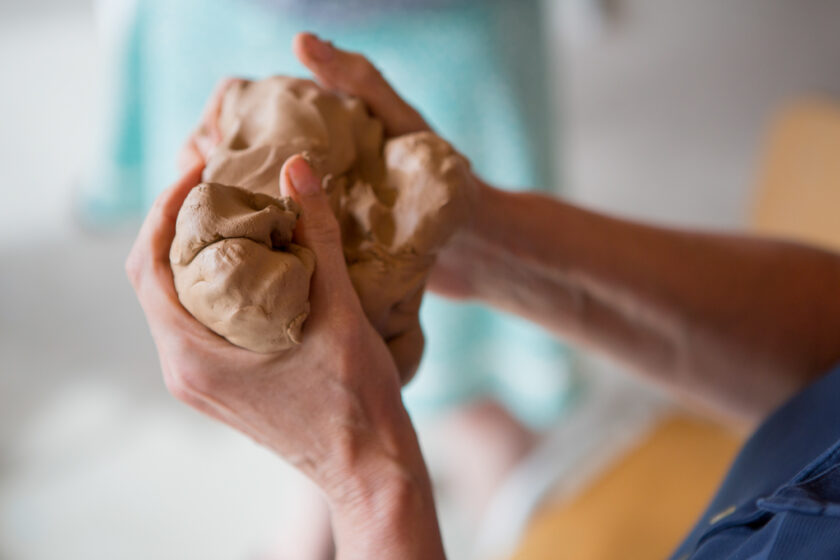
Artistic and creative activities have been proven to have a positive effect on health – this is the conclusion of a report presented by the World Health Organization (WHO) in November 2019. For this study, more than 900 international publications were evaluated – the most comprehensive evidence review to date on the effects of art on health. Activities such as dancing, singing, or painting can therefore promote physical and mental health and meaningfully support medical therapies. According to another finding of the report, creative arts therapies are not only comparatively inexpensive but also free of undesirable side effects.
In Anthroposophic Medicine, creative arts therapies such as music therapy, painting therapy, and eurythmy therapy have a firmly established place. Despite many years of positive practical experience, however, there was hardly any systematic research into their effectiveness until a few years ago. This is where the Research Institute for Creative Arts Therapies RIArT (Research Institute for Creative Arts Therapies) in the Department of “Creative Arts Therapies and Therapy Studies” at the Alanus University in Alfter comes in.
The WHO report published in 2019 explicitly emphasizes the effectiveness of art in the field of health promotion. What does this mean for the situation of creative arts therapies and that of Anthroposophic Medicine?
Harald Gruber: Of course, the fact that the World Health Organization sees art as a means of healing is a major boost for us. It is also a strong signal for us as a university; after all, we call ourselves the “University of Arts and Social Sciences.” Thanks to the WHO report, we are now perceived differently in society: creative arts therapies are not just nice to have, they are relevant. We can now assert this politically, socially, and societally in a different way.
Sabine Koch: Among the literature reviewed are also publications from our institute, such as a systematic review on stress management and stress prevention. It addresses both the positive influence of art therapy and of art itself, which is a central factor in therapy. Art works through aesthetics and the experience of beauty, but also through the symbolic communication of something that often can hardly be communicated verbally.
In relation to the WHO, further steps have already been initiated: following a request from the International Doctoral Consortium, it launched an initiative aimed at compiling research literature in order to be able to make specific recommendations for creative arts therapies in a similar manner. RIArT is directly involved in the consortium, which is led by Prof. Dr. Nisha Sajnani of New York University.
In autumn 2020, the Research Institute for Creative Arts Therapies turned five years old. What priorities do you pursue in your work?
Harald Gruber: Two aspects are important: first, we want to systematically stimulate, support, and also conduct research so that creative arts therapies are scientifically examined in various fields of application. Second, as part of a planned doctoral program, we offer graduates from the fields of art, medicine, or creative arts therapies the opportunity to further qualify academically.
Sabine Koch: In addition to internal dialogue with educators, artists, eurythmists, philosophers, and other disciplines, from the very beginning we also established contact with the other research institutes for creative arts therapies around the world in order to achieve these goals. There are four international institutes, two in the USA and one each in Israel and Australia. We are in close exchange with them. This has developed into a very productive collaboration, which has already resulted not only in the aforementioned international association of doctoral programs in creative arts therapies, but also in joint projects.
At the same time, from 2017 onward, we received more and more external inquiries from universities or university hospitals that wanted to work with us. They soon increased so much that we could no longer accommodate them all. That is why we are very pleased that our PhD program will soon start, whose doctoral candidates will be involved in research projects on a larger scale.
Where do you see creative arts therapies in ten years? What would be your ideal vision?
Sabine Koch: I hope that we will be able to put our current knowledge about the healing power of creative arts therapies to better use. This applies both through positions in clinical settings such as psychiatry, psychosomatics, or rehabilitation, and in other institutions such as autism centers or treatment centers for refugees. For this, excellent outcome and mechanism research is needed. It is therefore essential for these areas that we launch further third-party funded projects that allow us to investigate not only short-term but also long-term effects.
Harald Gruber: My big dream is that creative arts therapies will be integrated into the healthcare system like other therapeutic methods, so that they can be reimbursed by health insurance providers. Beyond that, I hope that they will be recognized as professions and that we will conduct research that is truly up to date. But in doing so, we must not forget ourselves. With art as our medium, we have a specific approach. With that, we can and should also take a clear position and not merely cater to whatever is currently in demand.
About the interview partners:
Prof. Dr. phil. habil. Sabine C. Koch heads the Research Institute for Creative Arts Therapies at Alanus University in Alfter and is Professor of Empirical Research in Creative Arts Therapies.
Prof. Dr. rer. medic. Harald Gruber is Dean and Head of the Institute for Art Therapy as well as Professor of Art Therapy/Research in the Department of Creative Arts Therapies and Therapy Studies at Alanus University in Alfter.
WHO fact sheet on the report (in English):
“Health Evidence Synthesis report: what is the evidence for the role of the arts in improving health and well-being in the WHO European region”. Art forms were examined in five categories: performing arts, visual arts, literature/culture, and arts in the digital space.
The Research Institute for Creative Arts Therapies RIArT (Research Institute for Creative Arts Therapies) is funded by the Software AG Foundation.
Interview by Christine Hueß (Software AG Foundation)