How Environmentally Conscious Is Generation Z?
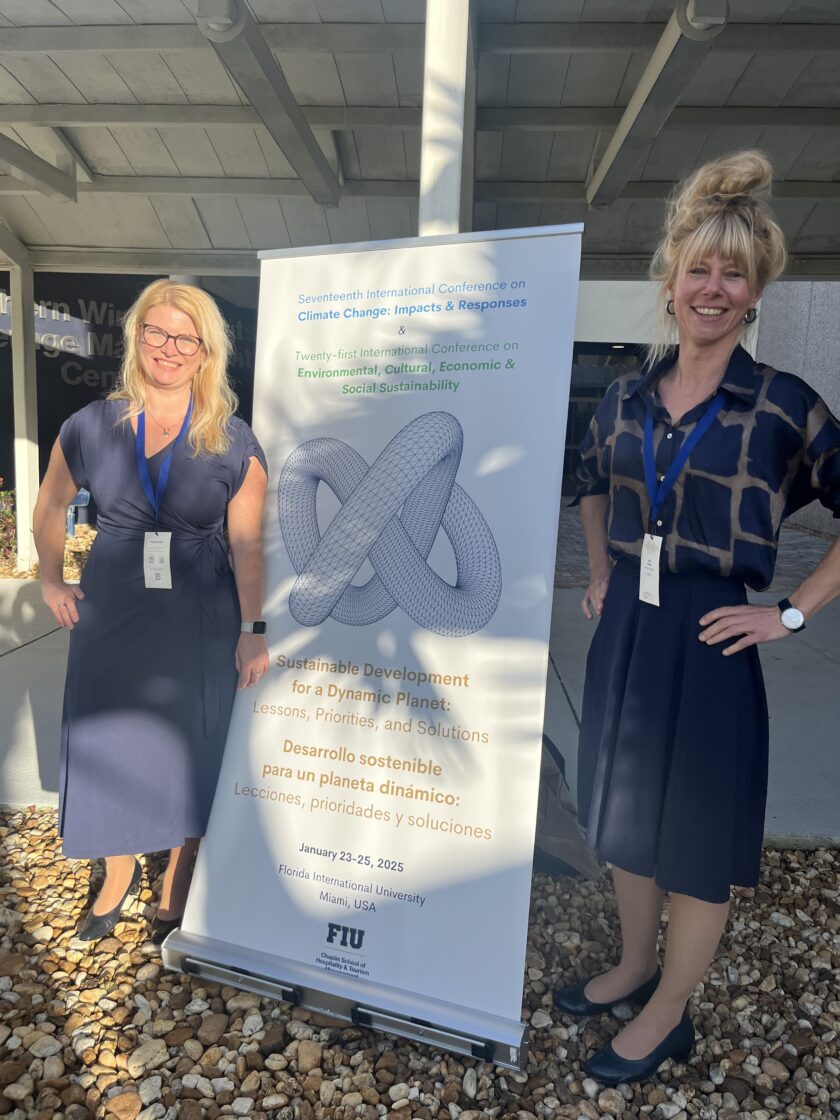
10.02.2025 - Department of Educational Sciences: Discussion of research findings at an international congress in Miami, Florida
Department of Educational Sciences: Discussion of research findings at an international congress in Miami, Florida
Alanus University of Arts and Social Sciences is conducting research within a collaborative project with the University of Luxembourg on the environmental awareness and environmental behavior of Generation Z, with particular consideration of Waldorf educational socialization. Initial research findings were presented in January 2025 at the international Conference on Environmental, Cultural, Economic & Social Sustainability in Florida.
The research project by Prof. Dr. Stefanie Greubel and Prof. Dr. Jost Schieren from Alanus University of Arts and Social Sciences, as well as Prof. Dr. Janne Fengler from the University of Luxembourg, examines the challenges and shaping potential of Generation Z with regard to their environmental awareness and environmental behavior. Particular consideration is given to the way adolescents and young adults with a Waldorf educational background engage with these issues. The concept of Waldorf education is based on an ecological, holistic approach to life. Can distinctive attitudes, coping strategies, and behavior patterns be identified among Waldorf students?
Prof. Dr. Greubel and Prof. Dr. Fengler presented initial project findings in January 2025 in Florida. And indeed: among students between the ages of twelve and eighteen, age, attendance at a Waldorf school, and specific characteristics of the family system all have a significant impact on environmental knowledge. In addition, the research team found that older students, as well as those who attend a Waldorf school or have specific family characteristics (e.g. language or religion), possess greater environmental knowledge than younger students without these contexts. With regard to attitudes toward environmentally relevant issues, the strongest factors identified are the family’s role-model behavior and a high level of knowledge in this area. For actual (self-documented) sustainable behavior, factors such as gender, attendance at a Waldorf school, facets of personality such as empathy and self-control, integration into circles of friends and the school community, the family’s role-model behavior, and environmental knowledge play a significant role. According to their own statements, girls as well as Waldorf students and students with a high degree of the above-mentioned factors behave significantly more environmentally consciously than other students.
As part of the conference, the research team was able to discuss with an interdisciplinary specialist audience the complexity of the relationship between knowledge, the acquisition of knowledge, attitudes, and actual behavior in the context of a sustainable lifestyle. One conclusion that can be drawn is this: the Waldorf school education system can foster a sustainable lifestyle. Cooperation with families to jointly promote a high level of environmental awareness and behavior can be regarded as promising.
Here you can find the project details, and here you can find the poster with the comprehensive research findings.