Places and Spaces – Palestine
Prof. Dr. Ulrika Eller-Rüter
Places and Spaces – Palestine
An artistic journey with intervention in public space in the West Bank/Palestine
May 2017 (funded by Erasmus PLUS)
Under the title Places and Spaces, art actions had already taken place in Krakow (Poland 2015, in collaboration with the Academy of Fine Arts Krakow and Prof. Zbigniew Bajek) and in Stellenbosch (South Africa 2015, in cooperation with the Visual Art Department of Stellenbosch University).
This time, Places and Spaces ventured into the Arab world. As part of a cooperation with the Fine Arts Department of Al Quds University Abu Dis, Professor Dr. Ulrika Eller-Rüter traveled to Abu Dis, Palestine, from April 30 to May 10, 2017, together with five art students from Alanus University.
Individual insights into the heart of a deeply rooted conflict merge with their own artistic methods and thoughts.
Arriving in the unfamiliar city…
Curious and attentive, the group encountered the various cultural facets of Palestine. Their accommodation was also located in Abu Dis, a place inhabited predominantly by people of Muslim faith.
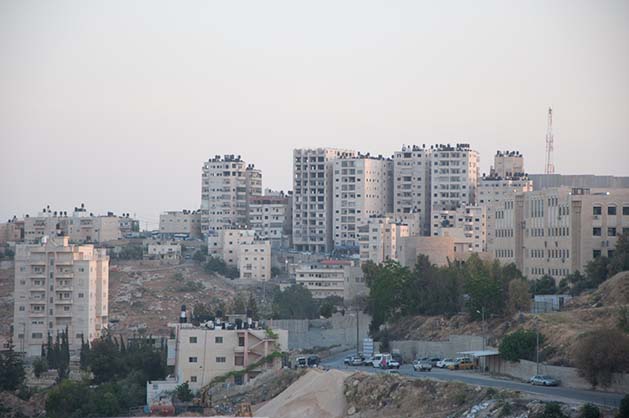
Surrounded by a barren landscape and strewn with rubbish were the expanses of a city in which a mixture of resignation, revolutionary spirit, and desolation hung in the air; a city whose architecture consisted of uniformly looking multi-story sandstone houses with equally uniform, precisely placed water tanks on the roofs. Again and again, everywhere, one could hear dogs barking, roosters crowing, the noise of cars, and at regular intervals, rising above everything, the call to prayer.
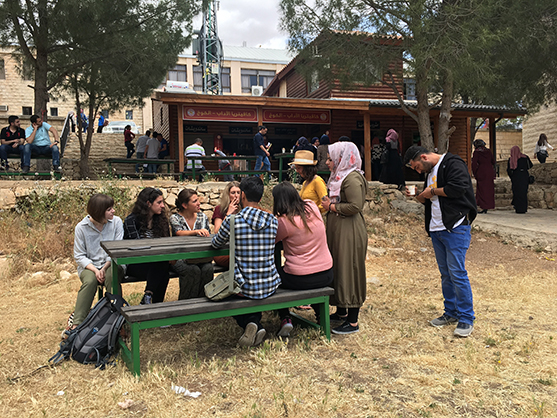
A clear contrast to this was the campus of Al Quds University. Like a small city of its own, the spacious grounds extend across the area, where around 15,000 students from all parts of Palestine spend most of their everyday lives. With 50 students, the Faculty of Fine Arts is the smallest at the university.
Once there, the art students from Bonn and Abu Dis met each other for the first time. Prof. Dr. Ulrika Eller-Rüter led a joint colloquium on the topic Places and Spaces – Art in Public Space and visited an exhibition by the local students together with the students from Alanus University.
They exchanged views on the various possibilities of artistic creation, learning, and teaching, as well as on the positions one can take as an artist.
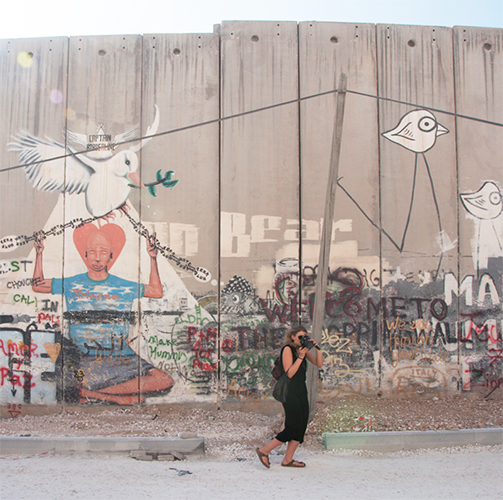
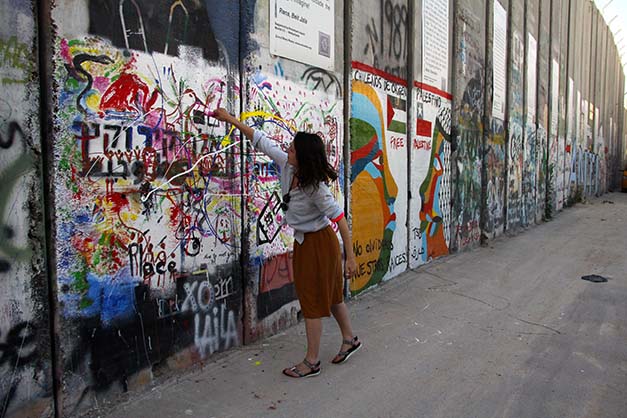
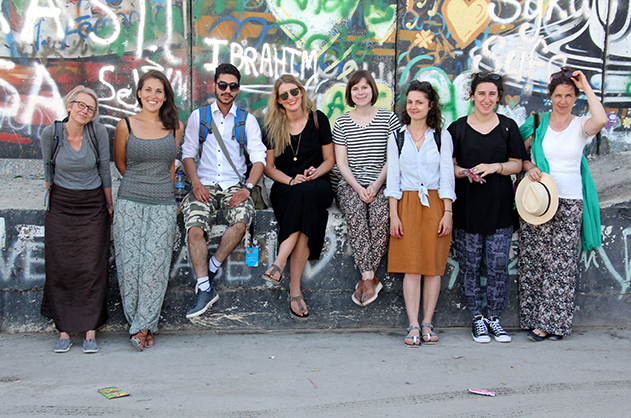
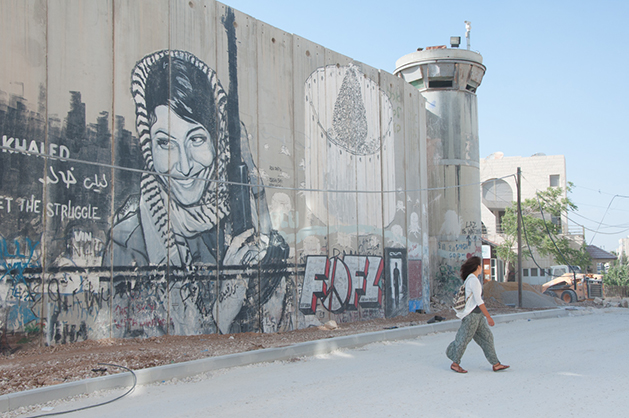
This was followed by a joint excursion to Bethlehem with a self-initiated artistic intervention by the students at the wall built by Israel.
Finding and developing one’s own theme…
In the following days, the students from Bonn embarked on an artistic journey of investigation and perception in the surrounding area. The cultural, political, and religious aspects, the landscape, the architecture, as well as everything sensually visible and tangible, could be incorporated into their site-specific work.
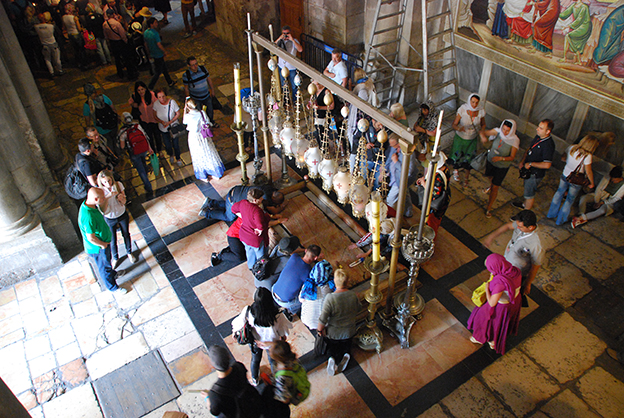
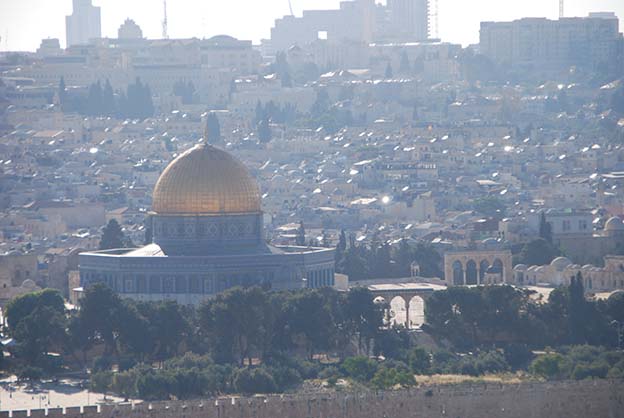
With open eyes and additional site-specific input from Prof. Dr. Eller-Rüter, the group explored the holy sites in Jerusalem and Bethlehem. History, politics, and three monotheistic religions repeatedly collide in these places and influence people’s everyday lives.
The excursions to the Dead Sea and Haifa revealed further striking contrasts: the Dead Sea, which lies far below sea level as the lowest area on earth, and Haifa, a flourishing city on the Mediterranean that promises cultural diversity and openness. On all excursions, the artists remained in dialogue with their own work, their individual practice. They collected, discarded, developed further, and allowed everything around them to have an effect on them.
As with the previous art actions in Poland and South Africa, a final exhibition was organized on site, where the results of the artistic work were presented:
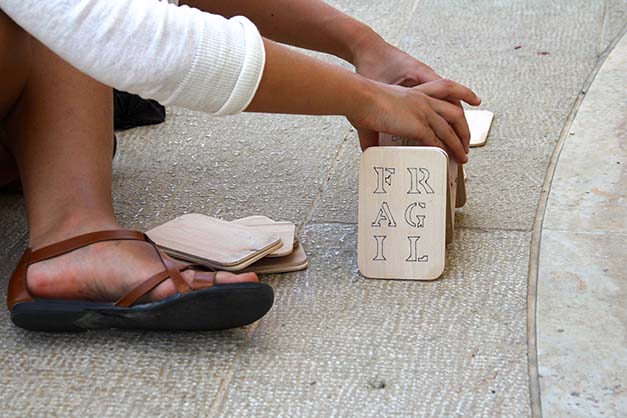
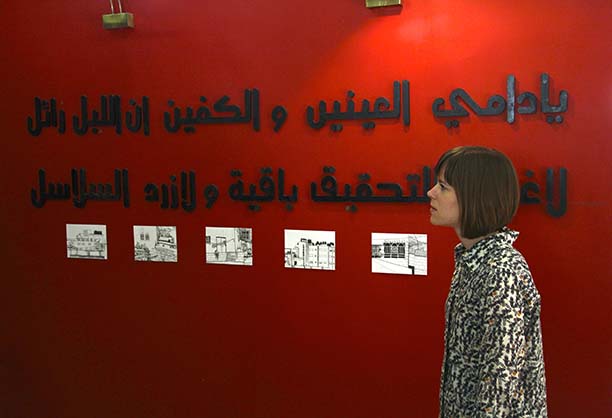
On May 8, 2017, seven artists presented their site-specific works at the Prison Museum of Al Quds University in Abu Dis. The artists chose their form of expression themselves; in the end, the media represented were drawing, graphic art, performance, video, installation, and photography.
Thematic focal points were:
Society and construction, rhythm as a sign of equality and identity, surveying places, marking safety and connecting with the ground, portraits of the city of Abu Dis and the “Green Line” as a border zone between the absolute truth claims of religions, and the recoding of Lessing’s “Ring Parable” from an artist’s perspective. The works interacted with the existing exhibits of the permanent exhibition at the Prison Museum. The exhibition was attended, among others, by professors, lecturers, and students of Al Quds University. Overall, the reactions to the free and experimental works of the Bonn artists—which were less tied to convention than is usual there—were open and positive.
With their return to Germany and the collected impressions in their luggage, the artistic work will continue and be expanded. An exhibition is being planned in which the results of Places and Spaces – Palestine will also be presented here.
Marie-Luise Meister, 24.05.2017
In Abu Dis were:
Prof. Dr. Ulrika Eller-Rüter, Nina Chubinishvili, Julia Glatzel, Katharina Haupt, Marie-Luise Meister, Anna Thielmann, Birgit Wenninghoff (Artistic Associate)