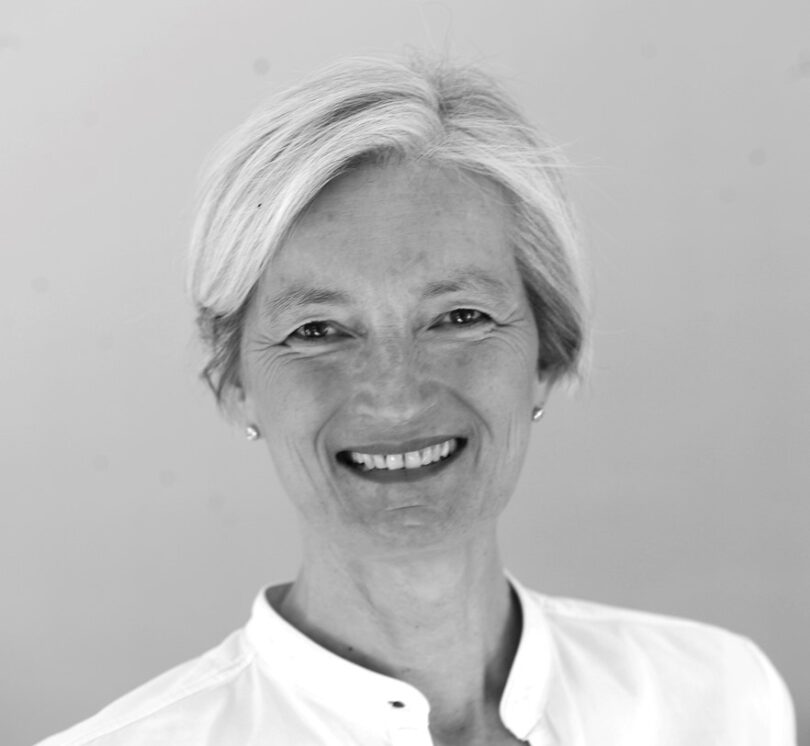
Dr. Katharina Gerlach
Head of the Institute for Eurythmy Therapy
Institute for Eurythmy Therapy, RiArt
Office hours: Mon-Thu 10 a.m.-12 p.m.
Biography
Curative eurythmist/eurythmy therapist.
Doctorate on the topic of documentation of movement-oriented mind-body therapies at Witten/Herdecke University. Head of the Institute for Eurythmy Therapy and collaborator at the Research Institute (RIArT), Alanus University of Arts and Social Sciences. Team IKAM coordination, International Professional Section for Curative Eurythmy of the Medical Section, School of Spiritual Science Dornach, Switzerland. Established in private practice at Therapeutikum Krefeld. Therapeutic areas of focus are neurological disorders, questions of exhaustion and depression, and disorders of the musculoskeletal system.
Publications
- Gerlach, K. (2023). Digital vademecum for curative eurythmy/eurythmy therapy. Der Merkurstab. 76(6):476-477.
- Gerlach K. (2023) Improvement od spinocerebellar ataxia 3 symptoms treated with Eurythmy Therapy – A case vignette. Complementary Medicine Research
- Langmair H, Gerlach K. (2023). Eurythmy therapy for a child with ADHD – A case description. Der Merkurstab. Journal of Anthroposophic Medicine. 76(2):108-115.
- Mehl, A., von Laue, B., Trapp B., Gerlach K., Reif, M. , Pretzer, K. ,.Zerm, R., Berger B., Gutenbrunner, C., Kröz, M. (2023). The Anthroposophic Art Therapy Assessment for Eurythmy Therapy Move (AART-ASSESS-EuMove. A Validation Study.
- Mehl, A., von Laue, B., Trapp B., Gerlach K., Reif, M., Pretzer, K., Zerm, R., Berger B, Gutenbrunner, C., Kröz, M. (2023). Approaching artistic expression through the therapist’s eye and patient’s self-reported inner correspondence. A conceptual framework to evaluate and better understand the impact of anthroposophic painting- and eurythmy therapy on clinical outcome, Poster WCIMH.
- Gerlach, K. (2023). Strengthening and healing elements in eurythmy therapy, Newsletter of the Section for the Performing Arts at the Goetheanum.
- Gerlach K., Mehl, A., Trapp B., Pretzer, K., Kröz, M.,von Laue, H. (2023). Revision of a validated peer-report questionnaire to assess assessment of Eurythmy Therapy: AART-ASSESS EuMove 3.0: An expert consensus process, Poster, International Research Congress.
- Gerlach K., Weißkircher A., (2023). Eurythmy therapy in schools – Design of an evaluation of eurythmy therapy at Waldorf schools. Der Merkurstab, 76(2):119-123.
- Gerlach, K., (2023). Eurythmy Therapy Movement Meditations: acitivity and mindfulness mitigate COVID-19 symptoms – an expert consultation, Der Merkurstab, 76(2):119-123.
- Szöke H., Sommer M., Streit E., Grah C., Winkler M., Busche P., Pöchtrager S., Mergelsberg J., Wullschleger C., Gerlach K., Heine R., Fitger R., Matthes H., Soldner G. (2022). Long COVID from the perspective of Anthroposophic Medicine – Symptoms and treatment options. Recommendations of an international expert commission for medical professionals. Der Merkurstab. Journal of Anthroposophic Medicine. 75(1):12-21.
- Gerlach K., (2022). Treatment with Eurythmy Therapy after COVID-19 Disease – An Expert Consultation). Der Merkurstab. Journal of Anthroposophic Medicine. 75(1):56-61.
- Gerlach K. (2022). Development of a guideline for case vignettes in eurythmy therapy CAVI-EYT – an expert consultation process. Der Merkurstab. Journal of Anthroposophic Medicine. 75(1):56-61.
- Gerlach K., (2022). Patient Reported Effects of self-help Eurythmy Therapy managing Covid-19-Illness – A Case-Vignette. Journal of complementary Medicine Research.
- Stadler I., Gerlach K., Veit V., Krüger M. (2021). Treatment of Crohn’s disease with eurythmy therapy – a case vignette. Der Merkurstab. Journal of Anthroposophic Medicine. 74(6):490-495.
- Gerlach K. (2021). Guideline for case vignettes in eurythmy therapy. Der Merkurstab. 74(3):284.
- Gerlach K. (2021). Burden due to post-zoster neuralgia with irritable bladder and eyelid twitching treated with eurythmy therapy – a case vignette. Der Merkurstab. 74(2):163-166.
- Gerlach K. (2021). Process orientation in curative eurythmy – Case study on treatment for fear of driving. Der Merkurstab. 74(1):54-62.
- Gerlach K., Baars E. (2020). Documentation in curative eurythmy: structures, questionnaires, measuring instruments. Der Merkurstab. Journal of Anthroposophic Medicine. 73(2):77-85.
- Gerlach K. (2020). Color Movement Meditation in cardiac arrhythmias associated with sleep disorders and anxiety: A 70-year-old female treated with Eurythmy Therapy. Poster Annual Conference of Medical Section.
- Gerlach K., Rodrigues Recchia D., Büssing A. (2019). Development of a documentation instrument for movement-orientated Mind-Body-Therapies taking the example of Eurythmy-Therapy. Complementary Therapies in Medicine. CTIM_2019_124.
- Gerlach, K., Veit V., Walter S., Weißkircher A. (2021) Treatment of mild depression and psychosomatic irritable bowel syndrome with mindfulness-oriented eurythmy therapy – A case vignette. Der Merkurstab. Journal of Anthroposophic Medicine. 74(4):355-359.
- Gerlach K., Büssing A., Baars E., Weisskircher A. (2020) Assessment in movement-orientated mind-body therapies taking the example of Eurythmy Therapy . Der Merkurstab. Journal of Anthroposophic Medicine. 73(2):119-135.
- Gerlach K., Arndt Büssing, Baars E., Weisskircher A. (2019). Documentation in movement-orientated mind-body-therapies taking the example of Eurythmy-therapy. Poster. Movement (Brain-Body-Cognition) International Conference, Tel Aviv, Israel. TLV-2019—Abstract 509.
- Gerlach K., Pohlman U. (2019). Migraine treatment with eurythmy therapy. Movement (Brain-Body-Cognition) International Conference, Tel Aviv, Israel. TLV-2019-W-D-Abstract 565.
- Gerlach K., Edelhäuser F. (2019) Curative eurythmy and body-oriented meditations for neurological disorders. Der Merkurstab. Journal of Anthroposophic Medicine. 72(6):416-427.
- Gerlach K. (2018). Perceiving and treating – intention and effectiveness – documentation and results in eurythmy therapy. Lecture. Symposium on eurythmy therapy – Experience of clinical studies – Practice and theory, Alfter.
- Gerlach K., Büssing A., Baars E., Weisskircher A. (2018). Documentation Structure for Eurythmy Therapy (EYT) Treatment in Everyday Practice. Poster. Conference of the School of Spiritual Science in the anthroposophic medical movement, Dornach.
- Gerlach K., Pohlman U. (2018). Effectiveness of eurythmy therapy in migraine. Conference of the School of Spiritual Science in the anthroposophic medical movement, Dornach.
- Gerlach K., Pohlman U. (2017). Subsiding of migraine symptoms after eurythmy therapy. Der Merkurstab. Journal of Anthroposophic Medicine. 70(4):312-317.
Projects
Vademecum Eurythmy Therapy
The vademecum on the treatment of various symptoms and clinical pictures with eurythmy therapy is aimed at accredited experts in eurythmy therapy and interested physicians.
As an independent form of therapy, Eurythmy Therapy is one of the main interventions of Anthroposophic Medicine. It has existed since 1915 with the first curative indications for eurythmy exercises. Over the course of time, the medical view of many illnesses has changed and new symptom complexes have been added. Valuable positive experiences are made daily with traditional and new exercises, which are, however, not accessible to the medical-therapeutic community. Current Eurythmy Therapy treatment experiences for specific illnesses are collected from actively working colleagues from all over the world in the form of treatment sheets and short case descriptions.
https://eurythmytherapy-medsektion.net/en/vademecum/vademecum-introduction
Intuition in the eurythmy therapy process
As a rule, the exercises in the eurythmy therapy treatment process are selected from our traditional catalog. In addition, according to a survey, the exercises are also selected spontaneously and according to intuition. So far, we know little to nothing about intuition-based decisions in the field of EYT treatments.
Colloquia and further detailed expert surveys are intended to provide insight into this.
Intuition in anthroposophic medicine is an important element. Every day, outstanding work is done by us. In many cases, we do not know why and how we achieve and are able to achieve these results. This is intended to help us better understand the special characteristics of curative eurythmy and how it works, and possibly also communicate this externally. It is also important for dialogue with prescribing physicians to be able to describe well where we stand and how we work. This promotes collaboration.
Dr. Katharina Gerlach katharina.gerlach@alanus.edu
http://well2move.de/intuition-im-eurythmietherapeutischen-prozess/
Eurythmy therapy in health care medicine: collection of basic treatment data by therapists and patients with the EDET instrument (EDET= german acronym for Single Case documentation Embodiment Therapy).
In clinics and in health care medicine, eurythmy therapy treatment concepts are successfully applied, but they are usually not documented in a structured way, thus they are not published and are therefore not available for scientific discourse. With the EDET instrument, treatment data can be collected properly and evaluated both quantitatively and qualitatively. The patient perspective is a major pillar of the instrument.
Responsible: Dr. rer. medic. Katharina Gerlach, Institute for Eurythmy Therapy, Alanus University of Applied Sciences, Alfter and Prof. Dr. med. Arndt Büssing, Institute for Integrative Medicine (IFIM) University Witten/Herdecke.
http://well2move.de/dokumentation/
The Case Vignette in Eurythmy Therapy – Development of a Format and a Guideline for the structured creation of small case studies explicitly for therapists
The Case Vignette in Eurythmy Therapy (CAVI-EYT) is a new format for the brief and at the same time appropriate description of individual cases from eurythmy therapy practice. It is based on the CARE Guideline, but omits the researched scientific-medical part. Later on, several case descriptions of different colleagues can be combined to the same symptom and a medical-scientific elaboration can be added.
Responsible: Dr. rer. medic. Katharina Gerlach, Institute for Eurythmy Therapy, Alanus University Alfter in collaboration with the Medical Section, Dornach.
http://well2move.de/wp-content/uploads/2021/02/FAVI-6.2.2021-pptx_compressed.pdf
COVID-19 rehabilitation in eurythmy therapy
Collection and discussion of treatment approaches in eurythmy therapy for the rehabilitation of COVID-19 patients. Instruments are the EDET documentation tool and the single case vignette eurythmy therapy (FAVI-EYT). The results will be discussed intercollegially and interdisciplinary.
Responsible: Dr. rer. medic. Katharina Gerlach, Institute for Eurythmy Therapy, Alanus University Alfter in collaboration with the Medical Section, Dornach.
http://well2move.de/wp-content/uploads/2021/01/Questions-for-patients-on-symtoms-COVID-19-2.pdf
Eurythmy therapy in schools – Design of an evaluation of eurythmy therapy at Waldorf schools
Survey of male and female teachers, parents, and male and female students.
Together with Prof. Dr. med. David Martin, Institute for Integrative Medicine (IFIM) University Witten/Herdecke, the Federation of Waldorf Schools
Eurythmy therapy in psychotherapy – Treatment data from health care medicine
Collection of treatment data in order to evaluate which psychotherapeutic issues are addressed with eurythmy therapy, using which treatment concepts, and with what effectiveness.
Research focuses
For Katharina Gerlach, the research focus lies on documentation and the collection of treatment data in health care medicine. For this purpose, she develops formats such as the EDET instrument and the case vignette in eurythmy therapy – FAVI-EYT. In all projects, great importance is attached to including the patient perspective. The aim is to create a collection of basic data on which large-scale research projects can build.
In cooperation with others, assessment and perception instruments for eurythmy therapy are being further developed, primarily for training purposes.