Equal Opportunities
Equal Opportunities
The Commission for Equal Opportunities, Inclusion and Diversity, in which women and men from all status groups at Alanus University (professors, academic staff, administration, students) and from the Alanus Werkhaus are equally represented, supports the Equal Opportunities Officer. If you have questions on the topic of equal opportunities, employees and students can contact either the Equal Opportunities Officer, her deputy, or one of the commission members.
Further contact persons for equal-opportunities-related topics are:
- the Inclusion Officer
- the Representative for Severely Disabled Persons
- the contact person for disadvantage compensation
- the contact person for students with disabilities
Equal Opportunities Officer and Deputy
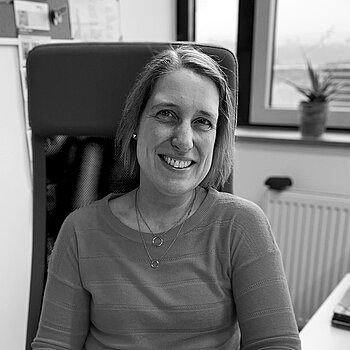
Sabine Hendrikx
Equal Opportunities Officer
Head of the Examinations Office
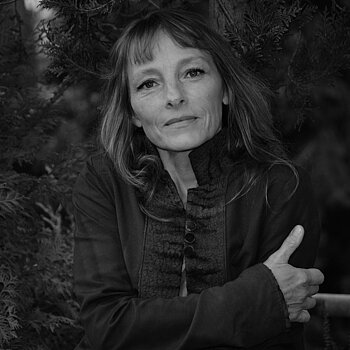
Prof. Suzanne Ziellenbach
Deputy Equal Opportunities Officer
Professor of Speech Training and Acting and Deputy Head, Department of Acting
Equal Opportunities Officer in Mannheim
The Equal Opportunities Commission of the Alfter campus is also supported by the Institute for Waldorf Education, Interculturality and Inclusion in Mannheim, represented by Prof. Dr. Ulrike Barth, as well as the acting Equal Opportunities Officer Nina Bernges and her deputy Emel Ipbüken.
Contact:
Nina Bernges
+49 (0) 621/309 48-53
nina.bernges@alanus.edu
Here you can find further information on the Equal Opportunities Officer in Mannheim.
Members of the Equal Opportunities Commission
- Sabine Hendrikx (Equal Opportunities Officer, Alfter campus)
- Prof. Suzanne Ziellenbach (Deputy Equal Opportunities Officer, Alfter campus)
- Nina Bernges (Acting Equal Opportunities Officer, Mannheim campus)
- Emel Ipbüken (Deputy Equal Opportunities Officer, Mannheim campus)
- Justin Rohner (student, Alfter)
- Meret Greve (student, Alfter)
- Pauline Berndt (student, Mannheim)
- Lena Rödel (student, Mannheim)
- Sabine Hendrikx (Administration and Technology)
- Alexander Röhler (academic staff)
- Sissy (Christina) Hunold (academic staff)
- Maurice Saß (professoriate)
- Ulrike Barth (professoriate)
- Lena Selge (advisory member, Alanus Werkhaus)
Open office hours
Office hours of the Equal Opportunities Officer
Alfter campus:
Students at Campus I and II can contact Sabine Hendrikx or Suzanne Ziellenbach via the email address gleichstellung@alanus.edu. Sabine Hendrikx and Suzanne Ziellenbach are happy to arrange individual appointments on site or online (e.g. via Teams / Zoom). Please contact the Equal Opportunities Officers for this.
You can reach Suzanne Ziellenbach (Campus I) on Fridays from 5:30 to 6:30 p.m. in the consultation room, 1st floor, Johannishof, Campus I. If she is not available, please call: 0172 99 69 371. Telephone registrations are also welcome here.
Mannheim campus:
Students at the Mannheim campus can contact Nina Bernges (phone: 06214 8440119; email: nina.bernges@alanus.edu). Office hours take place by individual arrangement.
Office hours of the Queer Unit
Under the motto “by students for students,” the student initiative consisting of Ida Molkenthin, Nacho (Tamara) Könen and Taris (Tabea) Rutha is happy to answer your questions and suggestions.
Email: queer@alanus.edu
50 Years of Alanus - We honor activists in the women's, queer, LGBTQI+, and anti-racism movements
August 2023
Mary Temple Grandin
(born on August 29, 1947 in Boston, USA)
As a child, she did not speak until the age of three and showed conspicuous behavior due to what was described as “brain damage.” However, contrary to the doctors’ recommendation, her parents did not place her in a home but tried to support her. After her parents divorced, her mother cared for her alone, along with three other siblings. It later became clear that her disability was autism, and Temple Grandin gradually learned to speak and to behave appropriately in social contexts. This was very difficult for her, because she primarily perceives the world cognitively and in images and had to acquire words almost like a kind of “foreign language.” She also had to learn social behavior intellectually, since she experiences emotions only in a rudimentary way. She was often so overwhelmed by processing the stimuli acting on her that she had uncontrollable outbursts of anger. But she also had wonderful ideas and imaginative ways of playing. Thanks to loving and targeted support in a therapeutic kindergarten and at a number of private schools, she was later able to attend university and earn a doctorate in animal science. Today she is a professor at Colorado State University and can effortlessly give long, humorous lectures. Because of the empathy for the perception and behavior of animals associated with her autism, she developed species-appropriate animal housing facilities, including for cattle. These facilities ensure that the animals are less afraid and that there are fewer dangerous situations and accidents involving people and animals. Through her work, Temple Grandin has also contributed greatly to understanding autism spectrum disorder, as the title of one of her books suggests: “I See the World as a Joyful Animal.” Her life is an example of how inclusion can succeed, but also of how this often still depends on the private commitment of those affected and their relatives because social structures do not yet provide enough support.
Sources and links for further reading:
https://de.wikipedia.org/wiki/Temple_Grandin
https://www.fembio.org/biographie.php/frau/biographie/temple-grandin
July 2023
Malala Yousafzai
(born July 12, 1997 in Mingora, Pakistan)
Malala became tragically famous at the age of 15 because the Taliban stopped the school bus she was riding in and shot her at close range, causing severe head and neck injuries. Fortunately, she survived the attack and was treated in a British hospital until she recovered. How did this appalling act come about?
Malala grew up in the Swat Valley on the border with Afghanistan, which was occupied by the Pakistani Taliban in the mid-2000s with the aim of establishing a “state of God.” As a result, girls were forbidden to go to school, listen to music, or leave the house unveiled.
Since January 2009, Malala has kept a blog on a BBC website and described the cruel daily life and restrictions imposed on girls and women under the Taliban (“Diary of a Pakistani Schoolgirl”).
In 2011, the Pakistani army was able to regain control of the Swat Valley, but the situation remained dangerous. Malala’s identity was revealed, putting her in danger. After the attack, the Taliban published a letter of responsibility stating: “Malala was attacked because of her pioneering role. She spread secular thinking…”
After her recovery, Malala and her family lived in the United Kingdom. She campaigns worldwide for girls’ education; a Malala Fund was established by UNESCO with the aim of enabling all children to attend school. In 2013, Malala received the European Parliament’s Human Rights Prize, in 2014 the Nobel Peace Prize, and in 2017 she was appointed UN Messenger of Peace. In her Nobel lecture she said: “Why is it so easy to give guns, but so hard to give books? Why is it so easy to build tanks, but so hard to build schools?”

Sources and links for further reading: https://www.fembio.org/biographie.php/frau/biographie/malala-yousafzai/ https://de.wikipedia.org/wiki/Malala_Yousafzai
June 2023
Bertha von Suttner
born on June 9, 1843 in Prague, Bohemia
Bertha von Suttner was a peace and women’s rights activist. She came from an impoverished Bohemian noble family (née Countess Kinsky). As a child and young woman, she learned several languages, pursued music, and traveled extensively. At the age of 30, Bertha had to earn her own living as a governess because the family’s fortune had been used up. She found employment in the household of the von Suttner family in Vienna, where she fell in love with Arthur Gundaccar von Suttner, who was seven years younger. She was then dismissed and placed with Alfred Nobel in Paris as a private secretary, which led to a lifelong friendship with the industrialist and benefactor. She secretly returned to Vienna and married Arthur von Suttner in 1876. The two fled to the Caucasus in Georgia, where they lived under difficult financial circumstances from odd jobs. Bertha gave language lessons and wrote popular novels and translations. She and her husband worked as journalists and reported for German and Austrian weekly newspapers on the Russo-Turkish War that began in 1877, as well as on the country and its people. In 1885, the von Suttner family reconciled with them, and they returned to Vienna, where they could live without financial worries.
By then, Bertha von Suttner had turned her attention to the question of war and peace, also inspired by conversations with the millionaire Alfred Nobel, who believed that the production of devastating explosives and their deterrent potential could make wars impossible.
In 1889, Bertha von Suttner published her anti-war novel “Lay Down Your Arms,” which became an international success overnight. By 1905 it had reached 37 editions in 16 languages. Set in aristocratic circles, the novel exposes masculine virtues such as courage, bravery, and fighting spirit, and depicts in a naturalistic manner the terrible consequences of acts of war. The harrowing portrayal of individual fates accounts for the book’s great success.
Bertha von Suttner used her fame and became the most important activist in the peace movement, “Peace Bertha,” as German nationalist circles derisively called her. In 1891, she founded the “Austrian Society of Friends of Peace,” whose chair she remained until her death; in 1892, she founded the German Peace Society. She took part in international congresses in Bern, Antwerp, and Hamburg and was involved in the preparations for the first Hague Peace Conference in 1899. On lecture tours lasting months through Europe and the USA, she advocated disarmament.
She was convinced that women deserved a seat and a voice in the “Council of Nations” and called on them to make a special commitment to peace. In 1904, she took part in an International Women’s Conference in Berlin. But Bertha von Suttner also had to endure mockery and ostracism. Her work was criticized as “unfeminine.”
In 1905, she was awarded the Nobel Peace Prize, which Alfred Nobel, who had financially supported her activities, had already endowed in 1901 at her suggestion.
In her speech, she made three proposals for institutions that could safeguard peace in the long term and that have now largely been realized with the United Nations (UN) and the International Criminal Court in The Hague:
– arbitration treaties to settle conflicts between states by peaceful means
– a peace union of all states that would have to repel any attack by one state against another with collective force
– an international institution that, as a court of law in the name of the peoples, would uphold justice.
The devastating consequences of war for people and society were her lifelong theme. With great foresight, she said as early as 1911, after the first bombs were dropped from airplanes:
“only one of two things is possible: either civilization will destroy war, or in a future war civilization will perish.”
Bertha von Suttner died in June 1914, a few weeks before the outbreak of the First World War, against which she had so often warned. The World Peace Congress planned for autumn 1914 in Vienna no longer took place.

Sources:
https://www.fembio.org/biographie.php/frau/biographie/bertha-von-suttner/
https://de.wikipedia.org/wiki/Bertha_von_Suttner
May 2023
Mary Anning (born on May 21, 1799 in Lyme Regis, Dorset, England)
Mary Anning is now regarded as one of the founders of paleontology. She was a brilliant scientist who lived and worked at a time when women had no rights to self-determination, education, or political participation. It was not until 2010 that the Royal Society included her in its list of the ten British women who have had the greatest influence on the history of science.
Mary Anning came from a poor family; only two of the ten siblings, her brother Joseph and she herself, reached adulthood. Her father was a carpenter, but to supplement the family income he collected the many fossils found on the Jurassic Coast of southern England and sold them to tourists as “curiosities.” At that time, it was not yet known that animal species could become extinct; most people believed in the biblical creation story, and even in science it was only a controversial theory that there may once have been animal and plant species other than those “created by God.”
Mary accompanied her father in the search for fossils. After her father’s early death, she and her brother had to support the family and had hardly any time or money for education. Elizabeth Philpot, a wealthy local woman who also collected fossils, recognized Mary’s talent and encouraged her to read scientific writings. At the age of 12, she found the first complete skeleton of an ichthyosaur known up to that point. In 1820, she made another sensational discovery: she found the first skeleton of a plesiosaur. Her talent lay both in recognizing the fossils and in excavating and drawing them professionally. She excavated the 7-meter-long skeleton of the plesiosaur over ten years using the simplest tools. To this day, it remains unsurpassed in quality. In 1828, she discovered the first pterosaur skeleton outside Germany. She also developed scientifically sound theories about the fossils she found, for example that the so-called bezoar stones were fossilized feces of ichthyosaurs (“coprolites”). In scientific circles, her excellent knowledge and skills were highly esteemed, but public recognition was denied to her. Museums and scientific societies named only the donors of the fossils; her name was not mentioned. The Geological Society of London refused her admission as a member or even as a guest because she was a woman—women were not allowed to become members until 1904. William Buckland, a scientist who was friends with her and had also published on her finds, at least managed in 1835 to secure her a small pension in recognition of her scientific achievements. In 1845, she was diagnosed with breast cancer, which was untreatable at the time, and after two years of suffering she died in 1847. The Geological Society held a eulogy for her, the first for a woman. Her significant finds are now exhibited in the Natural History Museum in London, and many of the extinct species bear her name. During her lifetime, she did not find the opportunities to make an impact or the social recognition she would have deserved. Because she was a woman with hardly any rights in the Victorian era, because she came from the destitute working class, and because she was unable to obtain the formal education that would have matched her potential and enabled a scientific career.
Sources and links for further reading:
Ammonite (film 2021)

April 2023
Mariama Bâ, born on April 17, 1929 in Dakar (Senegal)
Mariama Bâ became world-famous with her first novel “So Long a Letter” and was described as an “icon of African women’s literature.” She was a teacher, later left the school service due to illness, and worked in the regional school authority. After separating from her husband, the mother of nine became active in women’s associations and advocated for education and women’s rights in speeches and essays.
In the autobiographical novel “So Long a Letter,” she processed her own life story. It tells of the Muslim teacher Ramatoulaye, whose husband, with whom she has twelve children, leaves her and takes a younger second wife, something legitimized and considered entirely normal by the polygamy permitted for men in Islam. For the protagonist, however, this is accompanied by many humiliations and great efforts to raise her twelve children alone. In the letter, which spans the entire novel, she describes this, as well as how the painful experiences she lives through lead her out of traditional gender roles and self-denial, to her friend Aissatou. From her she receives support and encouragement. The novel is a plea for female self-determination and solidarity and against traditional Islamic law, which permits men almost everything and women almost nothing.
Mariama Bâ was discovered in 1980 through a competition organized by a Japanese publisher who announced the “Noma Award for African Literature,” in which her book won first prize. Unfortunately, she died of cancer just one year later. Her second novel “Scarlet Song” was published posthumously. Through her breakthrough, other African women writers also gained access to the international book market and thus reached a wider public.
“The nostalgic songs in praise of the African mother are no longer enough for us. What matters now is to give the Black woman the place she fought for alongside men in the struggle for independence, a place that corresponds to her abilities, her awareness, and her contribution to the economic development of our countries.” (Mariam Bâ, 1980)
Sources and links for further reading:

March 2023
Rosa Luxemburg: March 05, 1871
Rosa Luxemburg was a left-wing socialist who devoted her entire life to the revolutionary self-emancipation of the proletariat. Coming from a Polish-Jewish family, she was already a member of a secret group called “Proletariat” while still in secondary school, where she came into contact with the writings of Karl Marx. She later belonged to the left wing of the SPD and was close friends with the women’s rights activist Clara Zetkin. She advocated for women’s independence in practical terms, but saw an independent women’s movement as a danger to the unity of the “working class.” Because of her self-confident manner and her own critical opinions in a male-dominated society, she was insulted by political opponents both within and outside Social Democracy in antisemitic, sexist, and nationalist terms. She was a co-founder of the Communist Party of Germany. She and Karl Liebknecht, the two leaders of the Spartacist uprising in Berlin, were treacherously murdered on January 15, 1919. With her courage and brilliant mind, she set many examples that continue to influence our society to this day. Her famous phrase “Freedom is always the freedom of those who think differently” was and remains a great support for emancipation and freedom movements.

Sources and links for further reading:
https://www.fembio.org/biographie.php/frau/biographie/rosa-luxemburg/