“We can all actively help shape equality.”
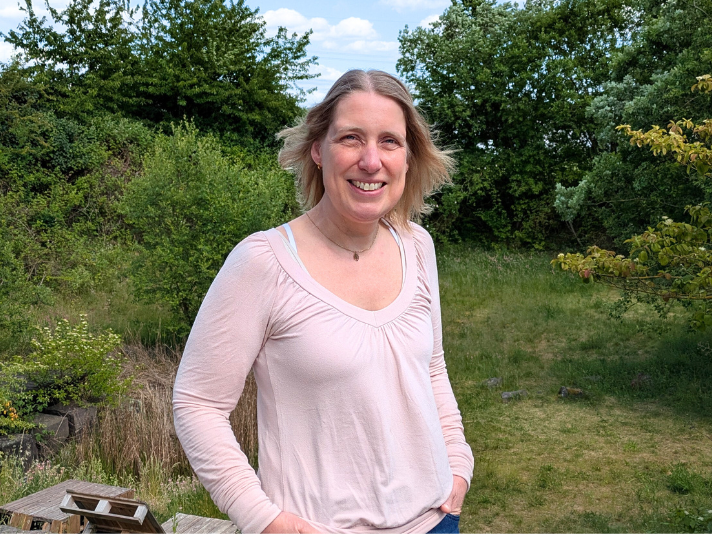
04/06/2025 - Interview with Alanus Equal Opportunities Officer Sabine Hendrikx.
Interview with Alanus Equal Opportunities Officer Sabine Hendrikx.
Sabine Hendrikx is beginning her second term as Equal Opportunities Officer at Alanus University of Arts and Social Sciences in Alfter near Bonn. In doing so, she is taking over the office from Pauline Andrade Schnettler. In the interview, Sabine Hendrikx explains why equality work must be actively shaped – including in the university context – and what priorities she would like to set during her new term of office.
Why did you apply again for the position of Equal Opportunities Officer?
I see it as a concrete responsibility of the university to stand up for equal opportunities and equality. Whether studying with a child, gender representation on committees, or anti-discrimination work – we still have a great deal to do in the area of diversity and equality – for all genders, by the way, and not just men and women. For example, despite a higher number of female students, some departments and subject areas have a comparatively large number of male professors. We need to counter this in order to make the composition as balanced as possible.
What priorities would you like to set? What matters to you personally?
We have only just adopted an anti-discrimination policy for the university that regulates how to deal with experiences of discrimination and sexual harassment or violence. Now we need to move it forward, raise awareness of these issues, and strengthen the newly established complaints structures. We have already trained a number of trusted contacts, but we still see a need for internal networking and mutual support among these trusted contacts.
In addition, I see it as a central part of our work to collect data and support our work with figures: What exactly is the gender distribution among professors, on committees, and at leadership level, but also among students? This allows us to define precise goals for our work and then make the evaluation available to the university public once a year in an equality report.
Why is equality work at universities so important – especially today?
All over the world, we are seeing a backlash when it comes to equality and diversity. That makes it all the more important to take a stand and say very clearly: diversity is a strength. In my view, universities bear a special responsibility. As places of thinking, research, and personal development, we shape not only our graduates, but also their environment and ultimately society. Without diversity, innovative strength, perspectives, and social justice as a whole are lost. This affects not only the everyday lives of our students and staff, but also entire fields of research: discriminatory structures and the repression of diversity create blind spots.
What should students or staff members know if they would like to approach you with a concern?
I can always be reached during normal hours at gleichstellung@alanus.edu. If someone wants to speak with me, it does not have to be all that specific at first. I take concerns and observations very seriously. Simply get in touch with me or one of the trusted contacts. Very important: every conversation is confidential. Whatever concern is brought to me remains between us. Unless it involves a criminal offense. In this area, we are still in the process of clarifying from a legal perspective exactly what our duty of care as a university consists of toward staff and students.
What would you like to see from students and staff in order to actively live equality?
The most important thing is to be open to diversity and approach it with curiosity. And to have the courage to reflect on one’s own actions. None of us is free of prejudice, but we have opportunities to learn and continue developing. We need to reflect on our privileges and be aware of our own position. Especially when it comes to discrimination or sexual harassment, I can only urge people to look instead of looking away. By not addressing things, we ultimately only protect the perpetrators. And finally, everyone can get involved: in discussions or in seminars. We can all actively help shape equality.
Photo: Alanus University
Subscribe to our newsletter!
Receive selected events and news from Alanus University directly in your inbox every month.