Five Questions for Stephan Hankammer
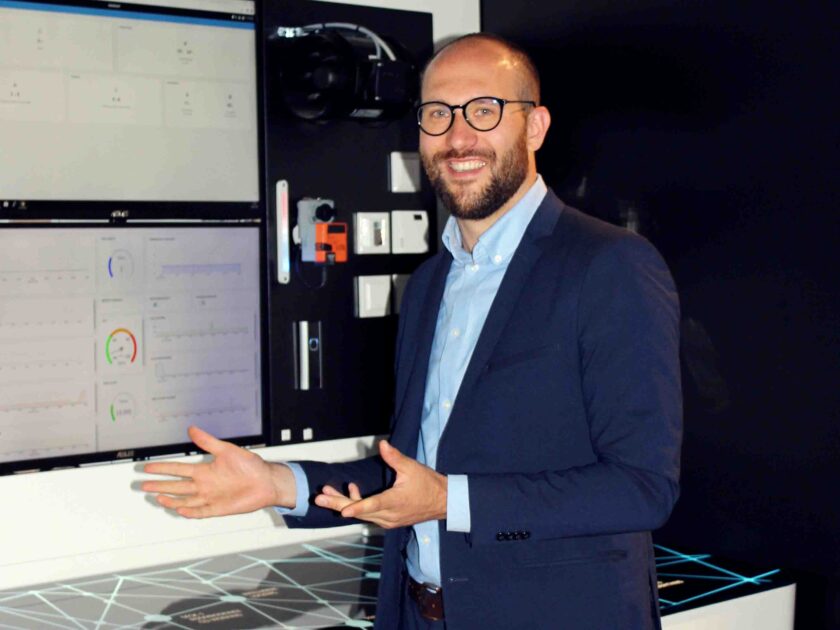
03.06.2019 - Stephan Hankammer has been Junior Professor of Sustainable Management and Entrepreneurship in the Department of Business since 2018. In this interview, Hankammer talks about what inspires him at Alanus University, which projects he is currently working on, and why the “Fridays for Future” movement inspires him.
Stephan Hankammer has been Junior Professor of Sustainable Management and Entrepreneurship in the Department of Business since 2018. In this interview, Hankammer talks about what inspires him at Alanus University, which projects he is currently working on, and why the “Fridays for Future” movement inspires him.
1. How long have you been at Alanus University, and what makes it special for you?
I have been working as Junior Professor of Sustainable Management and Entrepreneurship in the Department of Business since September 2018, and what I particularly value about Alanus University is its creative environment and the very consistent socio-ecological transformative orientation of the university as a whole. I experience Alanus University as a place where many of the most pressing current social issues are enthusiastically taken up and discussed. This is true also, and especially, among students in the Department of Business.
2. What project are you currently working on?
On various projects in the field of sustainability-oriented innovation management. Together with Prof. Robin Kleer of the Vlerick Business School in Brussels, I am currently researching the role of companies and the design of business models in the so-called post-growth economy. To do this, we conducted and analyzed interviews with various internationally active socio-ecologically oriented companies such as Dr. Bronner’s. In another project, I am working in cooperation with the Institute for Technology and Innovation Management at RWTH Aachen on possibilities for the socio-ecological shaping of digitalization, particularly in the textile industry.
3. You are researching how companies can manufacture “green products” together with customers: How do you do that, and which “green product” do you consider particularly innovative?
The starting point for this research is the paradigm shift currently taking place, away from closed innovation within companies toward open innovation, in which companies actively involve their customers and other stakeholders in the development of new solutions. My thesis is that companies can work hand in hand with their customers, suppliers, and society: idea competitions for overcoming sustainability challenges, crowdfunding for particularly environmentally beneficial new product ideas, and local, co-creative production with customers are just a few examples. A green product does not necessarily have to be particularly innovative in itself. Take the cargo bike. Is that particularly innovative? What is innovative are well-designed sharing systems that place customer needs at the center, or modular concepts that allow customers to adapt cargo bikes depending on how they are used.
4. Which people inspire you?
At the moment, especially the many young people who take to the streets on Fridays and fight for their future and for the preservation of nature. I believe that many older decision-makers in business and politics are slowly beginning to realize that a movement is emerging that cannot simply be ignored. At Alanus University, with our Sustainable Management degree program, we are well equipped to accompany many of these young people on their own educational path and train them to become better decision-makers.
5. Please complete this sentence: “When I’m not at the university…”
…then I’m riding my bike, hiking, standing on the beach volleyball court, or making music with friends.