Empowered for Life: Montessori Graduate Study
20.06.2022 - How do former Montessori students assess their school years? How does this alternative pedagogy, which is committed to individually fostering independence, affect their lives? A recent graduate study by Alanus University, funded by the Software AG Foundation, provides insights.
How do former Montessori students assess their school years? How does this alternative pedagogy, which is committed to individually fostering independence, affect their lives? A recent graduate study by Alanus University, funded by the Software AG Foundation, provides insights.
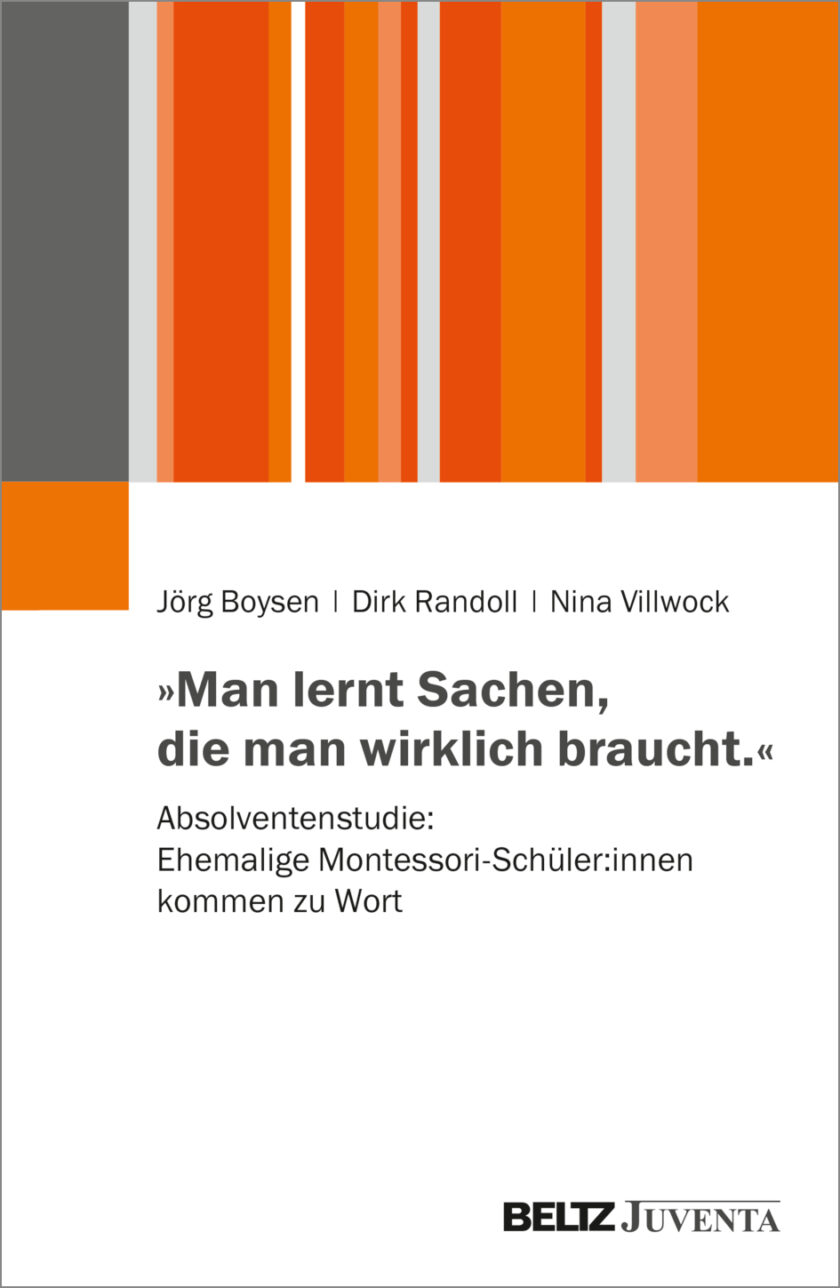
“Help us do it ourselves” — in line with this motto, Montessori education aims to support children and young people in ways appropriate to their development and prepare them for the rest of their lives — an ambition with which Montessori schools in Germany have for many years offered a widely valued alternative to mainstream state schools. But how do former students assess their school years in retrospect? And how do they evaluate their influence on their development? Answers to these and other questions are provided by a recent graduate study funded by the Software AG Foundation (SAGST), whose findings have now been published under the title “You learn things you really need.” 800 former students from 26 Montessori schools in eight German states took part in the survey. It was academically supervised and evaluated by Alanus University in Alfter in cooperation with the Montessori Federal Association of Germany.
“For around 30 years, the Software AG Foundation has supported independent schools in Germany and large parts of Europe in pursuing innovative approaches in education and schooling,” explains SAGST project manager Andreas Rebmann. “Against this background, we are particularly interested in the strengths and development potential of progressive education from the perspective of those for whom it is intended.” As the study shows, many former students look back on positive experiences during their school years. They found the encouragement of independence, experiences of community, mutual appreciation, and the joy of learning they experienced at school particularly enriching. As adults, they are involved in volunteer work and political engagement significantly more often than the general population. In their career choices, there are clear concentrations in fields related to people, relationships, and innovation, as well as creative work.
“We are convinced that the retrospective view of former students on their school years generates important forward-looking impulses — not only for the institutions concerned, but also for us as a foundation,” Rebmann continues. For this reason, SAGST had already supported similar graduate studies in the past — for example with former Waldorf students. In particular, this drew on the many years of expertise of the recently deceased educational scientist Prof. Dr. Dirk Randoll, who also contributed to the current Montessori study. Its findings are being published in a book by Beltz Verlag, which also provides an overview of Montessori education and its development as well as current challenges in Germany.
New publication:
Jörg Boysen / Dirk Randoll / Nina Villwock
“You learn things you really need”
Former Montessori students have their say
Beltz Juventa: Book, paperback, 111 pages
ISBN: 978-3-7799-7098-9
More information on the Beltz Publishing Group website
Book cover image: © Beltz Juventa