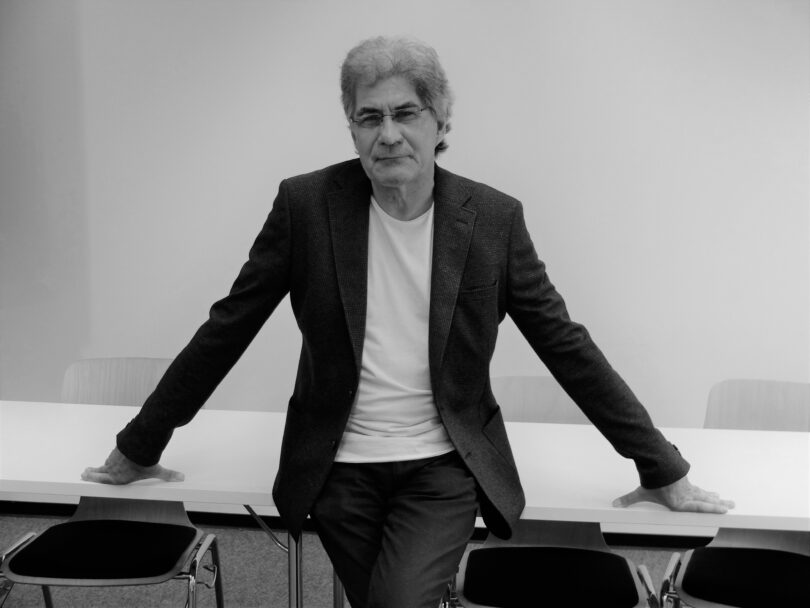
Prof. Dr. Axel Föller-Mancini (†)
Professor of Qualitative Methods in Educational Research
Field: Educational Science, Childhood Education, Art and Waldorf Education / Department of Educational Science
Phone: 02222.9321-1541
Biography
since 2018 // Professor of Qualitative Methods in Educational Research
2014 – 2018 // Junior Professor at Alanus University
2011 // Doctorate (Dr. phil.) at the Department of Mathematical Sciences and Technology (IMT), Section for Learning and Teacher Training at the Norwegian University of Life Sciences, As near Oslo
2010 – 2014 // Research Assistant at Witten/Herdecke University (Chair of Medical Theory, Integrative and Anthroposophic Medicine; Head: Prof. Dr. med. Peter Heusser)
since 2010 // Editor of the German-language section of the academic journal RoSE: Research on Steiner Education (peer reviewed, bilingual)
2005 – 2007 // Study program in Educational Action Research; Master’s degree program at RSUC, Oslo (Norway)
1990 – 2014 // Teacher at the hospital school of Gemeinschaftskrankenhaus Herdecke (subjects: German, Education, and Philosophy)
1988 – 1993 // Part-time study of philosophy (Ruhr University Bochum, Germany)
1978 – 1982 // Study of Waldorf education (Institute for Waldorf Education in Witten/Ruhr, Germany)
Publications
Monographs
Case-reconstructive understanding of school-biographical crises. An empirical study in the field of tension of educational working alliances. Norwegian University of Life Sciences. Dissertation; university publication (2010). ISBN: 978-82-575-0894-4. Oslo, 365 pages.
Edited volumes
Gisela Beck, Axel Föller-Mancini & Stefan Hasler (eds.): Observing and Reflecting on Lesson Processes. Contributions to Eurythmy Education Vol. II, Stuttgart, Edition Waldorf 2016, 178 pages.
Gisela Beck, Axel Föller-Mancini & Stefan Hasler (eds.): Realizing Educational-Artistic Motifs. Contributions to Eurythmy Education Vol. III, Stuttgart, Edition Waldorf 2016, 264 pages.
Contributions in edited volumes
“… the small learning groups and the holistic view of the human being” Results of a student survey on educational processes in pedagogical degree programs at Alanus University (locations Alfter and Mannheim) In: Sophie Pannitschka & Marlies Rainer: Traces of Learning: On the Culture of Adult Learning and Teaching. in print, Residenz Verlag, 2022, pp. 240-259
Personal relationship and institutional framework conditions. Socialization-related aspects of identity formation today In: Hans-Ulrich Kretschmer & Michael Ross (eds.): Culture and Science of Relationship-Based Services.. Dornach 2022, pp. 162-181
Perception or observation? Brentano’s theory of intentionality and the methodological problem of psychic self-perception according to Steiner In: Jost Schieren (ed.): The Philosophical Sources of Anthroposophy, Frankfurt/M. 2022, pp. 225-260
The Rubicon – separation and becoming the self in middle childhood. In: Greubel, S. & Schieren, J.: Children, Children! Perspectives on Child Development, Support, and Educational Attitude. Weinheim, Basel: Beltz Juventa, 2019, pp. 81-96.
Axel Föller-Mancini & Bettina Berger: The Rubicon as a developmental phenomenon in middle childhood. In: Jost Schieren (ed.): Handbook of Waldorf Education and Educational Science. Positioning and Development Perspectives. Weinheim: Beltz 2016.
Education as the art of teaching. Current references to a classical concept. In: Gisela Beck, Axel Föller-Mancini & Stefan Hasler (eds.): Realizing Educational-Artistic Motifs. Contributions to Eurythmy Education Vol. III, Stuttgart, Edition Waldorf 2016, pp. 29-43.
Lesson processes in the mirror of aesthetic experience. What the interviews still reveal. In: Gisela Beck, Axel Föller-Mancini & Stefan Hasler (eds.): Observing and Reflecting on Lesson Processes. Contributions to Eurythmy Education Vol. II, Stuttgart, Edition Waldorf 2016, pp. 97-109.
“I don’t want to be treated as half a person”. The educational-therapeutic working alliance as diagnostic potential in times of crisis. In: Mathias Bertram & Harald Joachim Kolbe (eds.): Dimensions of Therapeutic Processes in Integrative Medicine. An Ecological Model. Wiesbaden: Springer 2016, pp. 213-229.
La Evaluación Externa de los Pedagogos de los Jardines de Infantes Waldorf (Resumen/Abstract). Libro de Actas de 3th International Congress of Education and Development, Universidad de Granada, 2015, p. 389.
Elementos Teóricos y Prácticos para Primera Infancia: Una mirada desde la Evaluación Waldorf (Resumen/Abstract). Libro de Actas de 3th International Congress of Education and Development, Universidad de Granada, 2015, p. 388.
Axel Föller-Mancini & Charlotte Heinritz: “The Research Methods”. In: Heinritz / Hasler (eds.): Researching One’s Own Eurythmy Teaching. Contributions to Eurythmy Education Vol. I. Stuttgart: Edition Waldorf 2014, pp. 41-61.
Journal articles
A educacao inclusiva como catalisador para o desenvolvimento biografico de jovens refugiados EccoS – Rev. Cient. Sao Paulo, No. 61, p. 1-16 (2022)
Relato sintese sobre o percurso da pesquisa: lidando com novos espacos: criancas e adolescentes na apropriacao do complexo arquitectonico de CEU Butantao (Sao Paulo, Brasil) In: Joao Clemente da Souza Neto et al. (Ed.): Experiencias, Relatos, Teorizacoes, Rio Books, Rio de Janeiro, p. 25-38 (2022)
Föller-Mancini, A., Fichtner, B. & Mieskes, B.: Introduction. An international research project on the modes of use of social spaces in Sáo Paulo, Brazil. RoSE: Research on Steiner Education, Vol. XII/2 (2021).
Föller-Mancini, A, Berger, B: El rubicón como un fenómeno de desarrollo en la infancia media. RoSE: Research on Steiner Education, Vol. IX/2 (2018).
Crisis en la vida de los estudiantes. La alianza entre maestro y terapeuta como herramienta de diagnóstico en el tratamiento de condiciones criticas. RoSE: Research on Steiner Education, Vol. VIII/1 (2017).
“Is this already puberty?” When children experience the Rubicon. In: Universalis No. 7 / 2016, pp. 10-11.
Föller-Mancini, A., Heusser, P. & Büssing, A.: ¿Egocentrismo o Altruismo en la Adolescencia? Un Estudio Empírico sobre los Estudiantes de Colegios Waldorf, Cristianos y Públicos. Educar em Revista, Numero 56 / Jun. 2015 SER UFPR – Universidade Federal do Paraná, Brazil.
Föller-Mancini, A. & Peters, J: Quality development and evaluations in Waldorf kindergartens. Experiences with the Berlin Education Program. Part II. Studies on profile-specific evaluation. RoSE: Research on Steiner Education, Vol.V/ No.II (2015), pp. 75-94.
Föller-Mancini, A: Quality development and evaluations in Waldorf kindergartens. Experiences with the Berlin Education Program. Part I. RoSE: Research on Steiner Education, Vol.V/ No.II (2014), pp. 160-171.
Crisis in the lives of schoolchildren. The professional alliance between teacher and therapist as a diagnostic tool in the treatment of critical conditions. International Journal of Humanities and Social Science (under review).
Föller-Mancini, A.: Quality development and evaluations in Waldorf kindergartens. Experiences with the Berlin Education Program. Part I. RoSE: Research on Steiner Education, Vol.V/ No.II (2014), pp. 160-171.
Berger B., Föller-Mancini A., Heusser P., Martin D.: Can the Rubicon concept expand the understanding of developmental psychological tasks in middle childhood? Initial results of a grounded theory study. In: Abstracts of lectures and posters at the 3rd Scientific Congress of Anthroposophic Medicine, Berlin. Der Merkurstab. Journal of Anthroposophic Medicine. 65(2) 2012: pp. 156-157.
Berger, B. & Föller-Mancini, A.: Research project on the Rubicon. In: Martin, D.: Middle childhood – an approach. Merkurstab. Journal of Anthroposophic Medicine. 65(4) 2012: pp. 304-309.
Büssing, A., Kerksieck, P., Föller-Mancini, A. & Baumann, K.: Aspects of spirituality and ideals to help in adolescents from Christian academic high schools. International Journal of Children´s Spirituality. 17(2) 2012: pp. 99-116.
Föller-Mancini, A.: The educational working alliance in the hospital school or: Case analysis as a basis of knowledge and action in education. RoSE – Research on Steiner Education. 2(1) 2011: pp. 56-69.
Föller-Mancini, A., Heusser, P. & Büssing, A.: Self-centeredness in adolescents: An empirical study of students of Steiner schools, Christian academic high schools, and public schools. RoSE – Research on Steiner Education. 1(2) 2010: pp. 148-164.
Föller-Mancini, A.: Case studies in Waldorf education. On the relationship between student discussions and case conferences. RoSE: Research on Steiner Education, 1(1) 2010: pp. 85-91).
Büssing, A., Föller-Mancini, A., Gidley, J., Heusser, P.: Aspects of spirituality in adolescents. International Journal of Children´s Spirituality. 15(1) 2010: pp. 25-4.
Reviews
Peter Heusser (2011): Anthroposophic Medicine and Science. Contributions to an Integrative Medical Anthropology. (Habilitation thesis). Schattauer Verlag. Review published in: RoSE – Research on Steiner Education 3(1) 2012: pp. 169-172.
Johannes Wagemann (2010): Brain and Human Consciousness. Neuromyth and Structural Phenomenology. Shaker Verlag. Review published in: RoSE – Research on Steiner Education 2(2) 2011: pp. 132-134.
Alexandra Hoffend (2010): Educational understanding. A challenge for teacher education. Case study work as a means of mediation. Waxmann Verlag. Review published in: RoSE – Research on Steiner Education 1(2) 2010: pp. 204-206.
Rolf Göppel (2010): Education and the spirit of the times. Educational mentalities and educational discourses in transition. Stuttgart: Kohlhammer Verlag. Review published in: RoSE – Research on Steiner Education 1(2) 2010: pp. 201-203.
Research Focus
- Conceptualization and testing of possible applications of case reconstructions (teacher education, school concepts, early childhood education)
- Educational and social science case studies
- Developmental moments of middle childhood (Rubicon)
- Academic support of institutional evaluation processes
Current Research Projects
- Academic support and evaluations within the framework of the Federal Participation Act (BTHG).
Evaluations are being supervised for institutions under the umbrella of the federal association Anthropoi
- Motives for school choice: Which type of school do former Waldorf students choose for their own children?
Advertised doctoral topic, see also: Ongoing Doctorates
- Dealing with the new – how children and young people appropriate the opportunities offered by the educational and cultural institutions of the CEUs in Sao Paulo.
CEU is the acronym for Centro Educacional Unificado. It combines 14 larger educational institutions in Sao Paulo in which children, young people, and adolescents are supported. All CEUs are located in the immediate vicinity of a favela. In cooperation with researchers from Mackenzie University Sao Paulo, the research project examines the processes of change resulting from specific educational projects within the CEUs (case analyses, project analyses, effects on family systems). See also: Publications.
Completed Doctorates
Lulzim Dragidella
The education system in Kosovo. Structure of the education system in Kosovo in 1999 with support from the international community. (2021)
Larissa Beckel
“I don’t want to become a fairy tale!” Educational experiences of refugee adolescents at a Waldorf school. (2021)
Susanne Hartmann
Attachment quality and parenting behavior. Correlations against the background of middle childhood and its Rubicon phenomena. (2019)
Ongoing Doctorates
Anabell Dreber: Waldorf graduates in the decision-making process of school choice for their own children: Convictions, doubts, influences (since 2022)