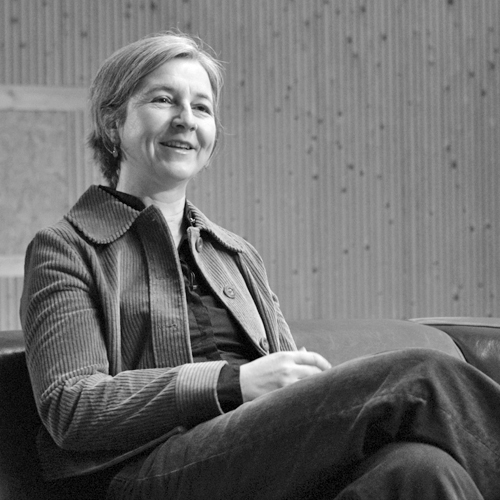
Prof. Dr. phil. Susanne Blazejewski
Vice Dean, Department of Business Administration & Professor
Chair of Sustainable Organization and Work Design in the Department of Business Administration
Phone: 02222.9321-1629
Academic Education
2015
Habilitation on the topic ‘Micro-Politics and Conflict in Multinational Corporations’ at Europa-Universität Viadrina, Frankfurt/Oder
2001
Doctorate (Dr. phil.) in Cultural Studies at Europa-Universität Viadrina, Frankfurt/Oder
1991 – 1998
Studies in Business Administration, Comparative Literature, and Spanish Philology at the universities of Saarbrücken, Dublin/Ireland, and Ann Arbor/USA
Professional Career
since September 2013
Professor of General Business Administration,
especially Leadership, Organization and Human Resources at Alanus University of Arts and Social Sciences
October 2010 – September 2013
Junior Professor of Leadership, Organization and Human Resources at Alanus University of Arts and Social Sciences
2001 – 2010
Research Assistant at the Chair of Management, Organization and Human Resources (Prof. Dr. Wolfgang Dorow; Prof. Dr. Jochen Koch), Europa-Universität Viadrina
1999 – 2000
Managing Project Director of the MBA program at Collegium Polonicum, Slubice/Poland
1998 – 2000
Practical experience in cultural and research management (Goethe Institute, Fraunhofer Institute, Herbert Quandt Foundation, Goethe Museum Rome)
Memberships
Academy of Management, European Group of Organisation Studies (EGOS), European International Business Academy (EIBA), International Association for Conflict Management (IACM), Association of University Professors of Business Administration (VHB), German Association of University Professors and Lecturers (DHV)
Publications
Articles in academic journals
Blazejewski, S.; Scharna, L. (2023). Green Team becomes Dream Team – How employee networks support companies on their path to greater sustainability. Personalführung 2023/7.
Barth, A.S.; Blazejewski, S. (2023). Agile office work as embodied spatial practice: A spatial perspective on ‘open’new work environments. Scandinavian Journal of Management 2023, 39, 101258.
Blazejewski, S.; Dittmer, F.; Buhl, A.; Barth, A.S.; Herbes, C. (2020). “That is not what I live for”: How lower-level green employees cope with identity tensions at work. Sustainability. Vol 12, 2020, 5778.
Buhl, A.; Schmidt-Keilich, M.; Muster, V.; Blazejewski, S.; Schrader, U.; Harrach, C.; Schäfer, M.; Süßbauer, E. (2019). Design thinking for sustainability: Why and how design thinking can foster sustainability-oriented innovation development. Journal of Cleaner Production 2019, 231, 1248-1257.
Blazejewski, Susanne; Walker, Eva-Maria (2018). Digitalization in retail work: Coping with stress through job crafting. Management Revue, Vol. 29, Issue 1, pp. 79-100.
Herbes, C., Brummer, V., Rognli, J., Blazejewski, S., & Gericke, N. (2017). Responding to policy change: New business models for renewable energy cooperatives–Barriers perceived by cooperatives’ members. Energy Policy, 109, 82-95.
Books & Edited Volumes
Rybnikova, I.; Soulsby, A.; Blazejewski, S. (2020). Women in management in central and eastern european countries. JEEMS. Nomos.
Blazejewski, S.; Hörisch, J. (2017). Challenges and opportunities for multinational corporations in sustainable development. International Journal of Business Environment 2017/9.
Becker-Ritterspach, F., Blazejewski, S., Dörrenbächer, C., & Geppert, M. (2016). Micro-politics in the Multinational Corporations: Foundations, Applications and New Directions. Cambridge, UK: Cambridge University Press.
Auer-Rizzi, Werner & Blazejewski, Susanne & Dorow, Wolfgang & Reber, Gerhard (eds.) (2007). Corporate Cultures in Global Interaction. Analyses, Experiences, Approaches to Solutions. Wiesbaden: Gabler.
Blazejewski, Susanne (2002). Image and Text. Würzburg: Königshausen & Neumann.
Book chapters
Blazejewski, S.; von Hoyningen-Huene, A. (2021). Cultural Education meets Emerging Leaders. In Good leadership: Leading differently through cultural education, Gerdiken, U., Ed. 2021.
Blazejewski, S. (2021). Touching moments in virtual spaces. In Touching Online Events – how digital events succeed with emotional impact. Luppold, S., Himmel, Wolfgang, Frank, Hans-Jürgen Ed. Springer Gabler: Heidelberg, 2021; pp 169-181.
Barth, A.-S.; Blazejewski, S. (2020). Space for tensions: A Lefebvrian perspective on new ways of working. In New ways of working: Organizations and organizing in the digital age, Mitev, N.; Aroles, J.; Stephenson, K.; Malaurent, J., Eds. Palgrave: 2020.
Blazejewski, S.; Barth, Andrea-Simone (2019). Pioneers, Exotics, and Troublemakers: Identity strategies of ‘green’ employees in the context of good work. In: Becke, G. ,Good Work and Ecological Innovations – Perspectives on Sustainable Work in Companies and Value Chains‘. Oekom-Verlag.
Blazejewski, S., et al. (2018). Enabling green spillover: How firms can benefit from employees’ green activism. Contemporary Developments in Green Human Resource Management Research: Towards Sustainability in Action? D. W. S. Renwick. Abingdon, Oxfordshire, Routledge.
Dittmer, F. and S. Blazejewski (2017). Sustainable at home—Sustainable at work? The impact of pro-environmental life-work spillover effects on sustainable intra- or entrepreneurship. Sustainable Entrepreneurship and Social Innovation. K. Nicolopoulou, M. Karatas-Ozkan, F. Janssen and J. M. Jermier, Routledge.
Editorial Activities
Journal of Eastern European Management Studies (Editorial Board since 2011)
Critical Perspectives on International Business (Editorial Advisory Board since 2014)
Chair
Chair of Sustainable Organization and Work Design (NOA)
Chair for Sustainable Organization and Work Design
Areas of Work
Leadership, organization, and human resources as the chair’s fields of teaching and research deal with and primarily concern people in organizations. Measures in human resource management significantly shape the individual work situation; organizational structures, norms, and rules limit the individual’s scope for action and orient individual actions toward the goals of the community / the company. At the same time, structures and rules only become effective through individual interpretation and application (or modification).
How people bring the organization as a whole and their position within it to life results from their qualifications, but above all from their personality, their individual experiences, their social embeddedness, and their wishes and needs. The chair’s work therefore focuses on the situation, forms of experience, and forms of shaping of people in organizations and is dedicated in particular to questions of identity and biography, the values and needs of individual and social actors in collective work processes. Closely linked to this at the organizational level are questions of organizational culture and organizational identity as well as interpersonal conflicts that arise due to the heterogeneity of needs and interests of individual actors in interdependent organizational contexts.
The chair advocates a holistic view of the human being. Work and collaboration in a company or as an entrepreneur are understood as a form of living, not as a means of earning a living for the “real life” outside the workplace. People do not want and should not be reduced solely to their performance potential in companies; they also seek meaning in life, personal development, and social as well as aesthetic experience at work. Companies and managers are therefore called upon today to address not only the economic but also the cultural and social demands of their employees.
Against this background, the chair aims to open students’ eyes to the human, social, and cultural dimensions of work in companies. At the same time, students should be enabled to critically question common instruments and structures of organization and human resource management in theory and practice and to reassess them time and again from the perspective of both companies and individuals. Knowledge of the historical development of the discipline as well as the diversity of theoretical approaches to organizational and personnel research is a prerequisite for this. Thinking anew is therefore understood here in a threefold sense: as a scholarly, critical, and holistic engagement with the sphere of human work in organizations.
Research
Research Focus Areas
- Identity work of ‘green’ employees
- Enabling structures for sustainable behavior in the workplace
- Sustainable organizational development
- Aesthetics in workplace design
- New organizational forms
- Micropolitics and identity in multinational corporations
Research Projects
IMKoN: Integration of employees into sustainability innovation processes
enEEbler: Employee engagement for renewable energies in companies
BENERKON: Citizen energy cooperatives – successfully identifying and managing conflicts