“Rethinking Childhood” – 15 Years of Early Childhood Education at Alanus University
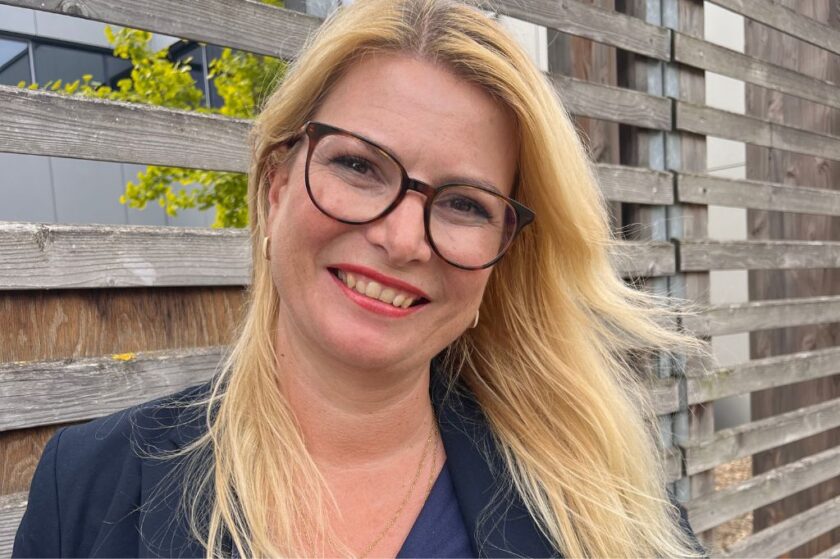
13/11/2025 - Interview with Prof. Dr. Stefanie Greubel, Head of Degree Program and Vice President of Alanus University
Interview with Prof. Dr. Stefanie Greubel, Head of Degree Program and Vice President of Alanus University
For 15 years, Alanus University of Arts and Social Sciences in Alfter near Bonn has offered the Bachelor’s degree program in Early Childhood Education – for people who want to understand and shape childhood: with head, heart, and hand. The degree program began in 2010 as one of the first in Germany and remains the only one with a Waldorf education focus. At the end of October 2025, the program’s 15th anniversary was celebrated with a major ceremony and many long-time companions. To mark the anniversary, Prof. Dr. Stefanie Greubel speaks in this interview about the courage to reshape childhood and why education begins where a child is truly seen.
Professor Greubel, 15 years of Early Childhood Education at Alanus University – what stands out most in your memory?
I would like to begin with a personal look back: in 2012, I became part of Alanus. I was a young mother, content with my previous path in academia, and had never actually planned to become a professor. But when I read Alanus University’s job posting, which seemed almost perfectly tailored to my interests, I immediately felt addressed. During the public appointment lecture, it quickly became clear to me: this is about a genuine concern. I looked out at young people packed tightly into the seminar room, almost pushing the members of the appointment committee to the sidelines, wanting to learn more about me and my perspective: “What matters to you in working with children? How do you view family? How can quality in educational practice be improved?” The encounter was so impressive that I thought: this is where I belong. And I was not disappointed.
I found a team bursting with energy, reliability, and humor. Together, we were able to help shape the young academic discipline of Early Childhood Education with a pioneering spirit, professional expertise, and great joy. We were one of the first Early Childhood Education degree programs nationwide and remain the only degree program with a specialization in Waldorf education. We are proud of that.
Social developments shape our work: in 2013, the legal entitlement to a daycare place for children under three was introduced; now the entitlement to all-day care for first graders is about to follow. We respond with continuing education, new focal areas, and flexible study access for career changers. Over the past 15 years, we have been able to show that we are characterized both by continuity, especially in terms of our educational outlook, and by flexibility, for example through the continuous development of our degree offerings. This combination of continuity and change is typical of us.
The most beautiful memories are often the quiet ones: positive feedback from students and parents on our work, welcoming new students and colleagues, getting through the COVID period together, including hula hoop in front of the screen and dancing in the hallway. Moments like these define the connectedness of our community.
What lies at the heart of Early Childhood Education, and why does our society today need more people who study this field?
I always say: this is the coolest degree program! And that is true for anyone with a genuine interest in children, family, and shaping society. Put confidently: Early Childhood Education combines the very best of everything, because it is interdisciplinary in its approach. We look at the socialization and development of children and their families from the perspectives of sociology, psychology, anthropology, law, and of course education. In short, we explore the overall context of the family and social system and then examine specific areas under a magnifying glass that are important for our educational work.
The degree program provides academic and practical skills while also encouraging reflection on one’s own personality. Our students learn to reflect on their own socialization, to recognize their individual strengths as well as their limits, and to grow beyond themselves.
Children’s living conditions have improved significantly over the past decades: they are bearers of their own rights and are increasingly recognized as experts on their own well-being. Nevertheless, we still struggle with unequal opportunities. One in four children in Germany depends on state financial support. That amounts to around three million children who are at risk of being excluded from social participation. Daycare centers and schools can help here, and we need people who, with a professional perspective and an empathetic attitude, can accompany and support children sensitively and competently in their developmental process. Early Childhood Education professionals have the necessary tools to create places where equal opportunities and educational quality are truly lived.
Alanus University also places value on an artistic outlook in non-artistic degree programs. How does that shape the training of future Early Childhood Education professionals?
For me, an artistic outlook means openness to the unknown and the ability to respond to situations creatively, intuitively, and flexibly. Art shapes personality and inspires new solutions. During their studies, our students encounter art on many levels: in artistic exercises, in expression, in play. This is not only about painting or singing, but about the formation of attitude. In artistic engagement, I learn a great deal about my own limits; singing a song can defuse a conflict-ridden situation; when engaging with theories of language development, I can build a bridge to language-stimulating nursery rhymes and dance. Ultimately, educational support for children cannot do without artistic elements, as they also represent a connecting element between nature and culture.
Alanus University is a place where these experiences are taken for granted. Students from different disciplines inspire one another. In this way, an artistic-educational outlook emerges that truly reaches children.
People often speak of “practice shock” after graduating. How do you prepare your students for the reality of the professional field?
We place great importance on that. Our strategy rests on three pillars: first, we maintain a strong practice network. Practitioners are involved in committees, courses, and excursions. Second, we support students intensively in seminars and small groups, before and after their internships. Third, we emphasize extensive practical experience: we have almost doubled the required practical days and made three practice periods per year mandatory.
The theoretical modules are also compressed into three in-person days, so that, if desired, two days per week remain available for practical work. This model significantly reduces practice shock while simultaneously promoting the transfer between theory and practice.
And personally: what drives you to champion Early Childhood Education so strongly after so many years?
At the beginning of this interview, I admitted that I had never actually wanted to become a professor, but that my enthusiasm for the topics of Early Childhood Education had captivated me. Today I can say: I love being a professor of Early Childhood Education!
On the one hand, I can immerse myself in the professional world of Early Childhood Education and contribute through my own research, for example on transition processes or family images. I am connected within the field and maintain friendships with representatives of Early Childhood Education throughout Germany. I can advocate for the concerns of Early Childhood Education in national committees and, last but not least, I have the great privilege of entering into dialogue with students. It gives me incredible joy to accompany students in their process, to inspire them for research and academia, and I myself repeatedly gain new insights in exchange with them and can thus broaden my horizons. This is an incredible enrichment.
I was deeply moved that many alumni came to our celebration and spoke appreciatively about our degree program and everyone involved, both from a professional perspective and from a personal one. You could feel a genuine joy of reunion that carried our anniversary celebration.
I ended my celebratory speech with a quote by actress Nathalie Beye: “It is an incredible luxury to love your work.” That is exactly how I feel – and I am grateful for it: to the Association of Waldorf Kindergartens and the Software AG Foundation as supporters of the degree program and the university, to my team, and to all our students – past and present.
 Alanus Hochschule