A thirst for knowledge
08/09/2020 - About studying Childhood Education directly after completing training as an educator
About studying Childhood Education directly after completing training as an educator
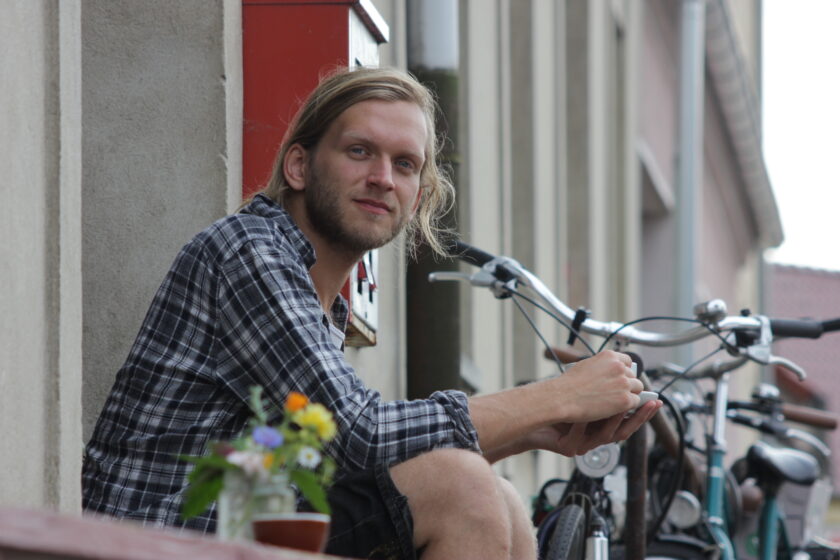
Lukas Lempke completed the Childhood Education degree program in cooperation with the Rudolf Steiner Institute in Kassel. In the interview, he explains why he chose the part-time degree program.
Why did you decide to begin studying Childhood Education at Alanus University?
During our training as educators, we were able to learn a great deal didactically and spent a lot of time reflecting on ourselves in an educational context, but we learned little about the theoretical background. Since I had already felt a thirst for this knowledge during my training, I was glad to hear about the cooperation with Alanus University and decided to follow my training directly with the Bachelor’s degree. I was also interested in the prospect of expanding my career opportunities through a Bachelor’s degree. Thanks to the compact structure of the Childhood Education Bachelor’s degree program, combining theory and practice seemed very manageable to me.
You were able to enter the second semester of the Bachelor’s degree program in Childhood Education due to the cooperation between Alanus University and the Rudolf Steiner Institute in Kassel. What advantages did this cooperation have for you?
Many fundamentals from the training had already been recognized in the degree program through the alignment of the curricula. This allowed me to build well on the knowledge I had acquired without too much repetition, while still being well prepared.
What were the challenges for you in this part-time degree program alongside your profession? What positive effects did the program have for you while you were still studying?
Completing a part-time degree program means that you need to demonstrate a great deal of self-discipline and good self-management. This was repeatedly challenging, but it was also something I had wanted to learn anyway. The degree program provided a good opportunity for that and was manageable alongside work.
Childhood educators do not have a clearly defined professional field. This clear positioning still has to take shape. At first, I found this realization difficult because I had rather naively assumed that all doors would be open to me. But the reality is that you have to find your own doors and try to open them.
Through a reflective and sometimes critical engagement with educational topics over the course of the degree program, my view of my own professional routine also became sharper. At times, this made it all the more difficult to “endure” entrenched structures. However, because of the many professional tools I was able to get to know during my studies, this did not lead to paralysis. Instead, I was able to expand my scope for action and also gain a better understanding of the kinds of structures I want to work in and how I can best contribute to them myself. My own choice of focus through the term papers also contributed to this.
What do you remember most vividly from your time as a student?
The small course sizes led to many wonderful connections. There were also many very enriching exchanges. The results of those and the contacts I made will definitely remain with me.
By the way, entering the academic world was completely new to me and very fascinating. The reflective handling of knowledge and various sources has had a positive and hopefully lasting effect on me.
What advice would you like to give to future students?
I see the degree program as a truly wonderful complement to my training. It is definitely worth getting to know new, diverse, and profound perspectives. Especially if you want to work in the social field, it is so important to remain curious, critical, and positive, and to keep continuing your education. The degree program provides a really good foundation for this!