“Real-World Lab Gut Alaune”: Collaborative Project Receives Funding
03/09/2021 - Federal Ministry of Education and Research awards concept
Federal Ministry of Education and Research awards concept
How can community-supported projects be developed cooperatively and sustainably? Gerriet Schwen, a graduate of Alanus University, took part in an Gut Alaune e.V. research project in an ideas competition: The “Real-World Lab Gut Alaune” has now been selected as one of ten concepts – and will receive funding of up to 200,000 euros from the Federal Ministry of Education and Research over a period of two years.
“We warmly congratulate them on this great success. The concept was convincing and was selected by an expert jury, the Federal Ministry of Education and Research, and citizens. Germany needs sustainable social innovations. We are pleased that Alanus University is a partner in this exciting project,” says Hans-Joachim Pieper, Rector of Alanus University. “Now that the 10 most convincing projects have been selected, a testing phase follows: concepts are to be tested in learning and experimental spaces and accompanied by academic research,” says Federal Minister of Education and Research Anja Karliczek.
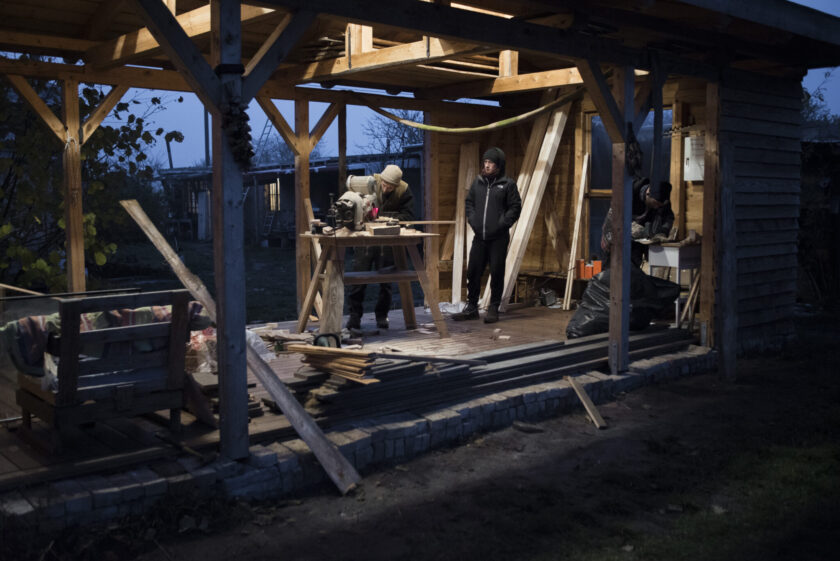
In the “Real-World Lab Gut Alaune,” the cooperation partners Gut Alaune e.V., Alanus University, Potsdam University of Applied Sciences, and the Institute for Ecological Economy Research are investigating how the expansion of community-supported projects can succeed. “We are publishing our experiences in a handbook that we also want to use to support other community-supported projects such as community-supported agriculture initiatives, shared housing communities, community gardens, and community-supported enterprises,” says Gerriet Schwen. The research project involves the Institute for Philosophical and Aesthetic Education (Prof. Dr. Thomas Schmaus) and the Institute for Process Architecture (Prof. Swen Geiss) at Alanus University. Students in Studium Generale and in the bachelor’s degree program “Philosophy, Arts and Social Transformation” can take part in events on topics such as patterns of cooperation and socio-ecological payment models and carry out practical projects on site. Students in the Department of Architecture have the opportunity to contribute to the collective project development of a participatory construction site.