Making Egypt’s mountains of waste smaller
27.08.2019 - On the founding of the Precious Plastic SEKEM Initiative – a report by student Lilli.
On the founding of the Precious Plastic SEKEM Initiative – a report by student Lilli.
In the autumn semester of 2018, I studied at our partner university, the Heliopolis University for Sustainable Development in Cairo, which is part of the SEKEM development initiative. Alongside the new language, Arab culture, honking cars, and plenty of sunshine, I was struck by the masses of waste visible everywhere, as well as the lack of environmental awareness.
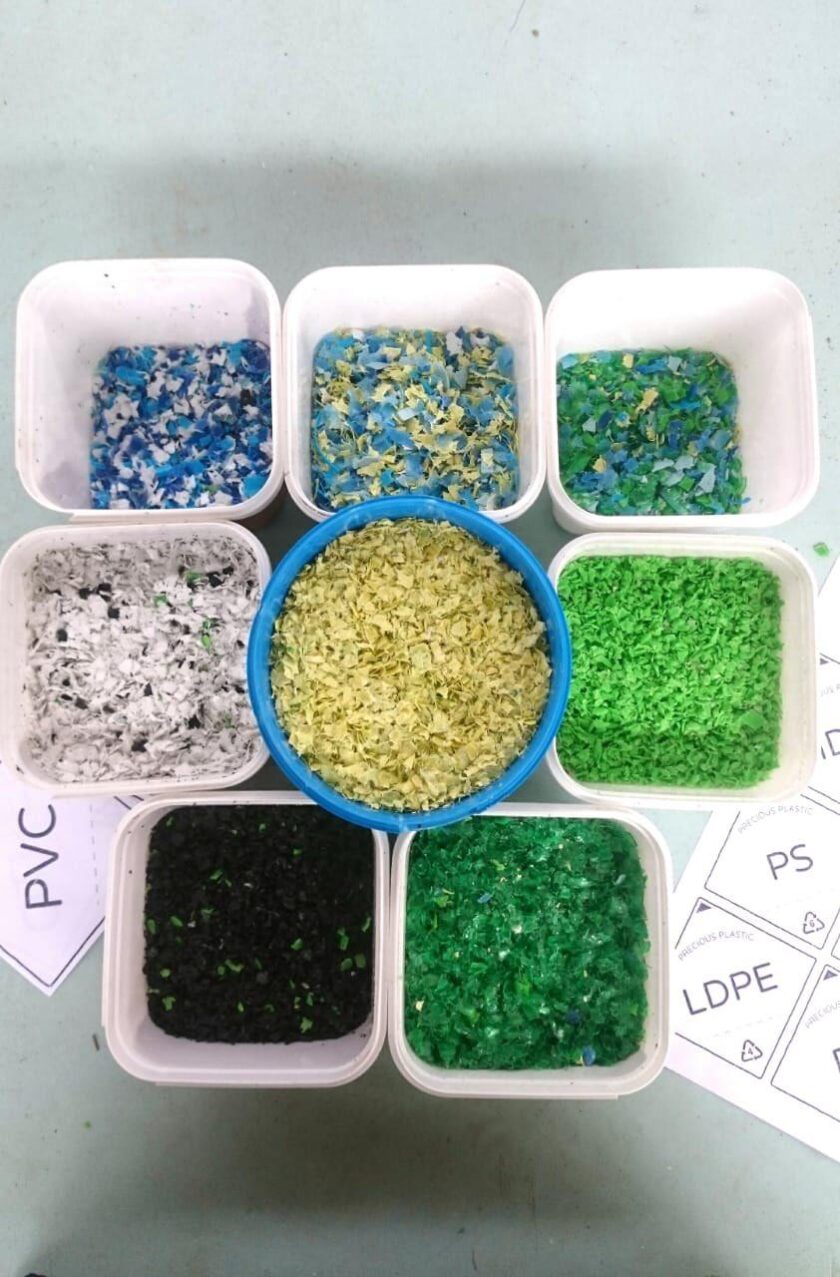
Together with Florian Mende, a student at Witten/Herdecke University, who was an intern in SEKEM’s Sustainable Development Department, I thought about how the waste problem could best be solved. We came across the open-source community Precious Plastic, founded by the Dutchman Dave Hakkens. On the platform, you can find construction plans for plastic recycling machines designed so they can be built anywhere in the world using simple, locally available components. Plastic should be understood as a valuable resource because it can be reused multiple times. The machines shred plastic into small flakes, which can then be heated and pressed into new shapes, ultimately creating new usable products.
We presented our idea at SEKEM to build the machines for the initiative and the university and to connect this with the Vision Goal “Zero Waste.” As a result, we were promised advance funding for the machines and were able to begin construction in October in cooperation with the Vocational Training Center, the vocational school, and the metal workshop on the farm. The project brought together university students, pupils and teachers from the SEKEM school, various companies, and environmental protection projects from Cairo.
In addition to building the machines, which were intended to focus attention on the targeted reuse of plastic, we carried out litter collection campaigns in which we pre-sorted and washed the different types of plastic, worked with companies, the hotel, and the cafeterias to consider how less waste could be generated, and organized events at the university that drew attention to the waste problem and presented possible solutions. For example, we held Zero Waste workshops, sewed new bags from old fabrics, discussed the use of natural branding in the fruit and vegetable trade instead of packaging food, and took part in the Nile clean-up organized by Very Nile in Cairo. There were lectures on the effects of plastic on our health, and we calculated how much money we could save by giving up single-use plastic and using a dishwasher.
Shortly before our departure, we were able to complete eight recycling machines. In a workspace, the first products made from recycled plastic are now being produced. It is a long and exciting journey, but step by step we can help reduce Egypt’s mountains of waste.
To support our initiative, you can do an internship at SEKEM for at least six months or, if you prefer, make a financial donation to the following account:
Account holder: SEKEM Freunde Deutschland e.V.
GLS Gemeinschaftsbank
IBAN: DE27 4306 0967 0071 6682 00
BIC: GENODEM1GLS
Reference: Zero Waste
A report by our student Lilli Pohl from the 5th semester of the Bachelor’s degree in Sustainable Management.
Read the report on Lilli’s semester abroad in Cairo.