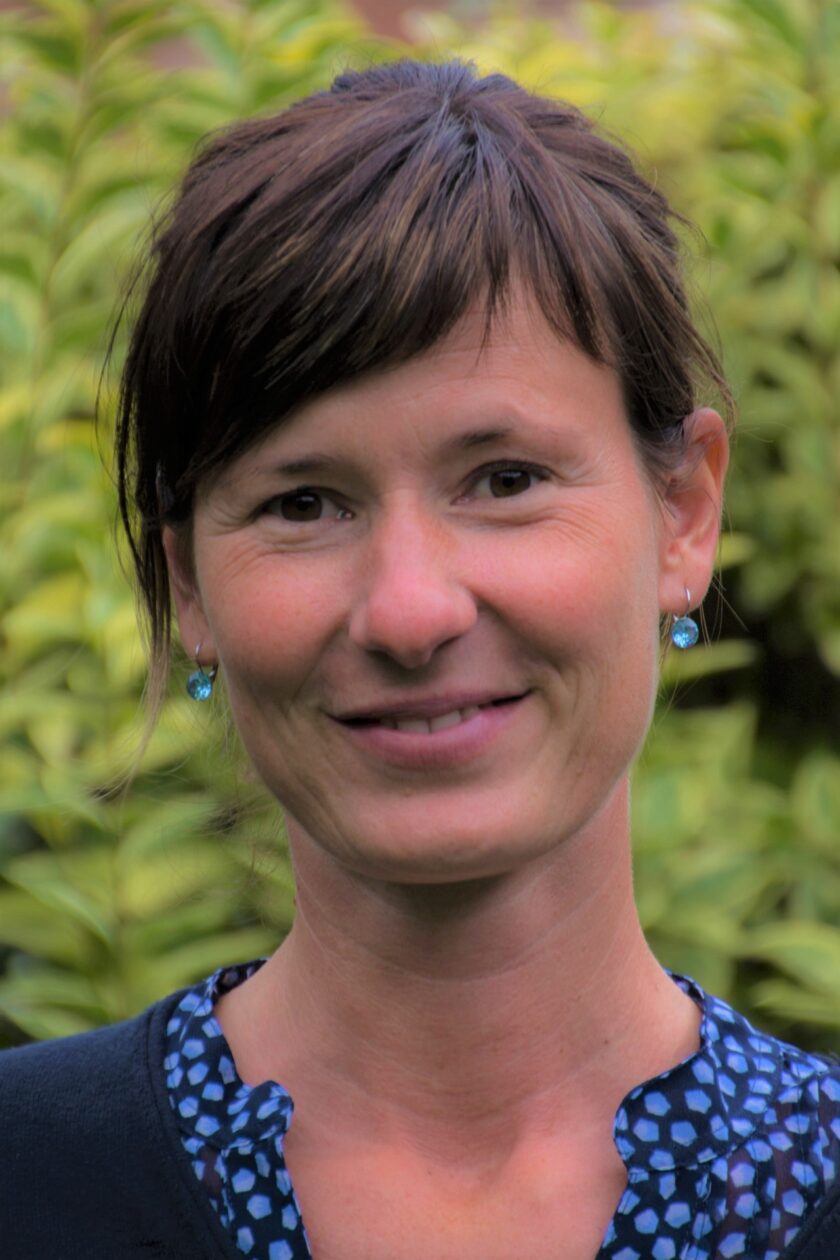
Interview with education student Susanne Gieseke
25/06/2020 - How do research and creativity fit together? And why is personal development relevant for educators? Susanne Gieseke is a specialist advisor for family education and explains in the interview how the part-time degree program in Education / Practice Research opened up new professional paths for her.
How do research and creativity fit together? And why is personal development relevant for educators? Susanne Gieseke is a specialist advisor for family education and explains in the interview how the part-time degree program in Education / Practice Research opened up new professional paths for her.
Why did you decide to study at Alanus University?
I was drawn to its educational focus. Since I myself have further training as a Pikler educator, the decisive factor for me was the clear child-centered approach within early childhood education as well as the dialogue with reform pedagogy approaches. This made it clear to me that my educational perspective on the child was in the right place here. In adult education, too, the personality of the instructor is considered fundamental to successfully supporting adults in their learning. Throughout my professional biography, I have taken part in various personality-development training courses. For me, the Studium Generale was an important criterion in favor of this university, since the personal development of the educator does not play any significant role in degree programs at other universities, and here I saw the opportunity to gain further inspiration in this area as well. Last but not least, I was also attracted by the university’s artistic and philosophical orientation, which matched my personal inclinations.
What is special about this degree program for you?
In terms of content, I find the connection between research and scholarship and art and philosophy very interesting. Seeing and experiencing the research process not only as an analytical process, but also as a creative one, is unusual at first, and over the course of my studies it influenced the way I approach my tasks in my professional field as well. I also experienced a great deal of freedom in engaging with the course content individually, against the background of my own learning biography, my own professional field, and my own interests. In this way, theoretical content immediately became something that concerned me personally and gained relevance. Learning through trying things out for myself and gathering my own experience was also enriching, and it was accompanied by a great openness to mistakes. I found the appreciative interaction between teachers and learners, and the dialogue on equal footing, very pleasant and rather unusual for a university. Personally, this was extremely helpful for me, as at the beginning of my studies I definitely felt challenged by having to take on the role of a student again after many years of professional work. The aesthetically beautiful place of learning that the university is, through the design of its rooms and surrounding grounds, creates an enriching and soothing learning atmosphere in which learning is enjoyable. For me, the university was a place where I always felt in good hands, both spatially and because of the caring people there. Not least, this was also due to the individual and careful support provided by the teaching staff.
What profession do you currently work in, and what tasks does it involve?
At present, I work as a staff member at management level for an educational provider that is responsible for many different educational institutions in the state of North Rhine-Westphalia (e.g. family education centers). Here I advise and support the educational staff who shape the family education program areas on site at these institutions. My tasks include, among other things, the management of specialist conferences, needs assessments and the development of staff training programs, the development and design of educational offerings, the preparation of planning aids and teaching resources, the academic and quality assurance and further development of the department, participation in specialist committees, networking, third-party funding acquisition, and teaching in staff training events. I began working in adult and family education as a freelance lecturer 17 years ago. Originally, this involved lectures, seminars, and courses for parents on topics relating to birth, parenting, and family life. Somewhat later, teaching assignments were added in professional qualification programs for parent educators as well as for nursery school teachers and childminders. For several years, I then worked as an educational staff member at a family education center run by the same provider, where I headed the “Life with Children” department. In addition to teaching activities, this increasingly involved more tasks in education management, including: needs-oriented planning of educational events in my department in terms of content, scheduling, and organization; preparation of the program booklet; acquisition and maintenance of contacts with lecturers for these offerings; the programmatic further development of the department; networking; and public relations work.
What professional opportunities has this degree program opened up for you?
The master’s degree in Practice Research in Educational, Therapeutic and Social Professional Fields provided me with the formal qualifications needed to work as a staff member at management level. Despite my initial state examination for teaching and various additional qualifications in early childhood education and adult education, I would not have been able to take up this position with a state-recognized continuing education provider, as an academic degree in the field of education is required for this role. In terms of content and also personally, the degree program gave me greater confidence in being able to place the field for which I am responsible within an appropriate academic context. A central task in my field of work is the assessment, evaluation, and quality assurance of educational practice against the background of the current academic context and scholarly discourse. In addition, the degree program has opened up the opportunity for me to use the wide range of practical knowledge I acquired and built up over the course of my professional work and now pass it on in an advisory and supportive capacity. The social dimension of early childhood, parenthood, and family life is currently increasingly shaped and influenced by economic interests. My professional work now offers me broader opportunities to shape and influence the nature and orientation of parent and family education offerings. These expanded options fill me with joy, satisfaction, and motivation both professionally and personally.
You can find further information about the master’s degree program Education / Practice Research in Educational, Therapeutic and Social Professional Fields here.
Please also feel free to contact us to arrange an individual consultation!