Five Questions for Benedikt Stahl
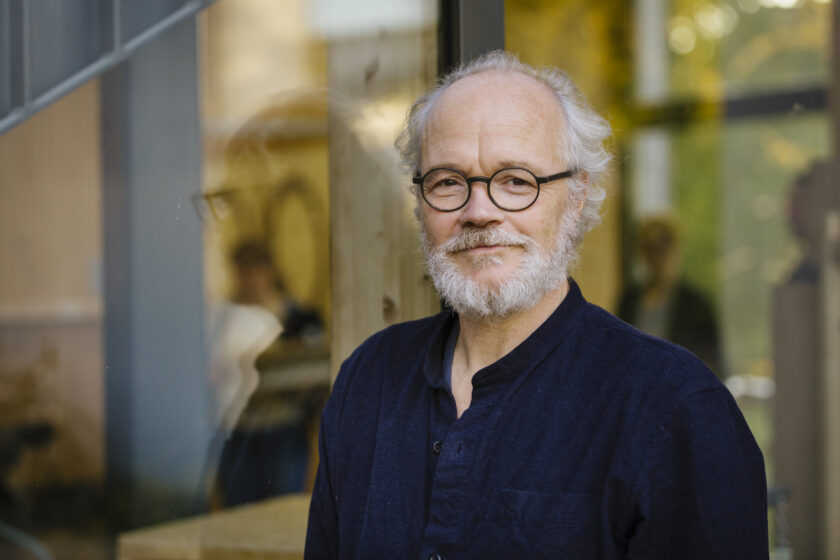
12.03.2021 - As an architect and professor, Benedikt Stahl is an expert in urban planning. He is currently advising the City of Bonn on the redesign of the Rhine promenade. In the interview, he talks about the challenges of the large-scale project, the wishes of Bonn’s citizens, and the ideas of Alanus students.
As an architect and professor, Benedikt Stahl is an expert in urban planning. He is currently advising the City of Bonn on the redesign of the Rhine promenade. In the interview, he talks about the challenges of the large-scale project, the wishes of Bonn’s citizens, and the ideas of Alanus students.
1. The Rhine promenade in Bonn is to be redesigned: at the beginning of the year, a competition involving architects and transport planners was launched. Why does the riverbank need to be redesigned?
The Bonn Rhine riverbank has quite simply “gotten on in years” and appears cluttered and neglected, and today it is not very inviting. In many places, the character of a street lined with parked cars still strongly defines this valuable point of contact between city and river. In the meantime, many cities along the Rhine and other major rivers have recognized and seized the opportunity to turn such spaces back into something very attractive, vibrant, and beautiful. After several earlier attempts, this will hopefully now also succeed in Bonn. The actual competition will begin in the course of spring 2021. At present, the city administration is in a preparatory phase and is busy gathering all possible preliminary information, experiences from other cities, citizens’ opinions, and expert advice. The competition will then begin on this basis.
2. As an architect and professor, you are an expert in urban planning. What is your role in this project? And what challenges and opportunities do you see?
I advise the City of Bonn in the run-up to the project. Naturally, my professional practice as an architect and university lecturer informs this work. On the one hand, parts of Bonn’s design challenges can be compared with the project to redesign the Düsseldorf Rhine promenade, which we planned with our studio about 25 years ago. On the other hand, impressions and ideas from student projects that I have supervised at Alanus University also play a role. In particular, repeatedly engaging with this topic and looking closely and attentively helps to condense these experiences, which I am happy to contribute in Bonn.
The challenges are very diverse. Above all, it will be important to find a broad guiding line that is characteristic of Bonn’s Rhine riverbank. With so many different interest groups—cyclists, pedestrians, tourists, strollers, local residents, restaurateurs, young and old children at play, and many more—it will be very difficult, perhaps almost impossible, to do equal justice to everyone if this is not to become a completely overloaded place. In that case, it would be better to leave it as it is.
3. Architecture students at Alanus have already engaged intensively with the Bonn Rhine riverbank as part of their studies. How important are such practical projects for aspiring architects?
Many beautiful ideas have already been born in our studio building at the university. And we keep trying to find and work on projects that come as close as possible to realistic tasks. That is where students learn to go out, ask the people concerned, form their own impression of the situation, and in creative design processes invent and present what they are convinced of.
4. Do the students’ ideas and suggestions play a role in the redesign process?
Such ideas are usually not taken into account directly. For the students, that is not the decisive point either; above all, it is about the learning process and new experiences. However, for example, in Bonn we were able to organize an exhibition of the student projects on the Rhine riverbank, and through that we entered into conversation with many people who are interested in the topic and some of whom are also actively involved in this process. Who knows—perhaps some of our suggestions did stick after all… And besides, I am allowed to be involved a little myself and try to contribute our findings, for example with the short Rhine riverbank films, to the foundations of the process.
5. The people of Bonn can contribute their wishes and criticism to the redesign process: what are people criticizing—and what ideas do they have?
The citizens have a wide range of ideas. These range from cycle highways to a new green Lenné promenade to water taxis with bus parking spaces and many different places for playing, lingering, meeting, “chilling,” doing sports, eating ice cream, drinking beer, dancing, making music, and and and… This will not be easy for the planners. But what people repeatedly feel is missing are attractively designed and easy-to-find connecting routes between the Rhine and the city. I hope that this, too, will play an important role in the designs.