Breaking New Ground: What Children Need in Times of Crisis
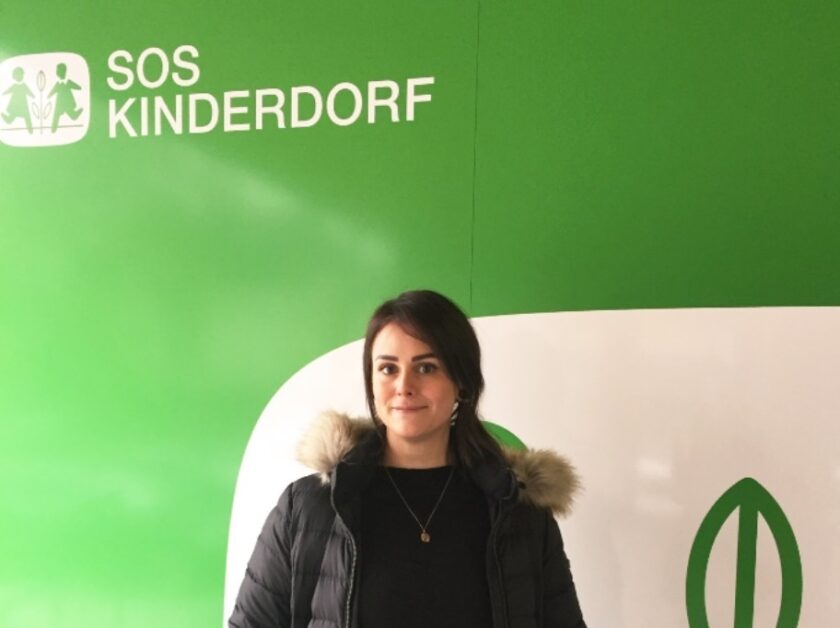
23/03/2021 - Cathrin Becker, alumna of the part-time degree program in Childhood Education, provides insights into her coordination role in residential child and youth welfare services and the influence of her studies on her professional career path.
Cathrin Becker, alumna of the part-time degree program in Childhood Education, provides insights into her coordination role in residential child and youth welfare services and the influence of her studies on her professional career path.
Where am I and what do I do?
In 2020, I took on the coordination role in the assessment group at the SOS Children’s Village Center in Dortmund. The assessment group is aimed at children between the ages of four and ten. The children are admitted as part of educational support services in accordance with Sections 27 and 34 of Book VIII of the German Social Code (SGB VIII). Reasons for admission to the assessment group include emotional or physical neglect or abuse, the absence of caregivers, as well as a lack of adequate care due to psychological or social problems and/or behavioral issues on the part of the child. Through a clearly structured framework individually tailored to each case, the aim is first to create a safe place for the children that provides the foundation for a comprehensive assessment process as well as educational diagnostic work. Here, it is possible to closely observe not only everyday skills and developmental stages, but also interaction with other children, social skills, emotional stability, etc.
The aim of the placement is to
- provide the children with a safe and appropriate living and care environment for a limited period of time (12–16 weeks),
- gain a differentiated picture of the young person’s condition, developmental stage, and life situation,
- enable intensive collaboration with parents, important caregivers, the youth welfare office, and other institutions and individuals involved in the assessment process,
- provide support during the transition to a suitable form of care.
After completing the part-time Bachelor’s degree program in Childhood Education at Alanus University, I took over coordination of the assessment group because, through my studies, I felt ready for a new challenge. My responsibilities include:
- Appointment coordination
- Creative duty and staff planning to ensure personnel continuity
- Contact person for cooperation partners and the family of origin
- Interface communication within the institution
- Ensuring the implementation of the educational / organizational framework
- Participation in admission, perspective, and final meetings
- Support with onboarding and team development processes
As part of my daily work, I keep noticing how much I benefit from my time at Alanus, whether in the field of educational diagnostics, biographical work with the children, or team and/or professional discussions.
How did I get here?
In 2014, fresh out of my training, I started working as an educator in an SOS Children’s Village family at SOS Children’s Village Sauerland. I quickly realized that I enjoyed working in residential care, but that my educator training had not given me enough tools personally and that I wanted to learn more. A traditional university of applied sciences was not an option for me because, on the one hand, I wanted to continue working full-time and, on the other hand, I had very clear ideas about what content a degree program would need to offer me. So in 2018, I chose Alanus University, where I was able to complete my Bachelor’s degree in Childhood Education as well as the accompanying certificate course in Inclusion Support. While working on my Bachelor’s thesis, I applied for the open position at the new SOS Children’s Village Center in Dortmund, where I have now been working since June 2020.
To what extent did my time at Alanus University shape me?
Studying at Alanus was a welcome change alongside everyday professional life and offered perfect integration. From the very first day, you were warmly welcomed by name and felt well received and supported by the lecturers throughout the entire degree program. Here, you were never just a student ID number, but were seen in the fullness of your abilities and personality. The teaching staff placed great value on relating to the students’ professional practice, and connections could be made at any time, for example through case studies, so that everything you had the opportunity to learn could be taken back to your workplace with confidence and assurance. Among my fellow students, I not only met remarkable individuals with exciting professional experience, but also found one or two friends. In my professional life, I can see that my methodological toolbox has expanded enormously as a result of the degree program. I also received many impulses, for example through the “Blick.Punkt.Praxis” component embedded in the program. Through it, I was able to gain insights into the work of other youth welfare providers, child protection specialists, and guardians ad litem, and thus get an idea of what might be a meaningful addition to my professional portfolio in the future.
In short, the part-time degree program in Childhood Education met me exactly where I was in 2018, supported me well over five semesters, and will certainly continue to positively influence many of my perspectives in the future. I am grateful for this wonderful time and would do it exactly the same way again at any time.