“Waldorf schools have great potential to offer children and young people equal opportunities”
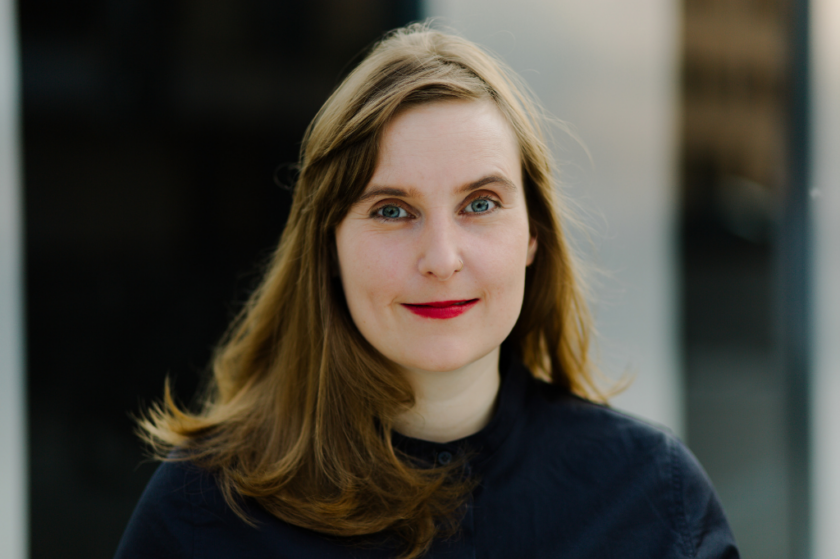
01.02.2022 - In her recently successfully completed dissertation, Larissa Beckel examines the educational experiences of refugee adolescents at a Waldorf school. In the interview, the scholarship holder of the Waldorf Education Research Training Group at Alanus University offers exciting insights into the research project and the methods used, talks about educational equity, and outlines the impulses she hopes to provide for Waldorf educational practice.
In her recently successfully completed dissertation, Larissa Beckel examines the educational experiences of refugee adolescents at a Waldorf school. In the interview, the scholarship holder of the Waldorf Education Research Training Group at Alanus University offers exciting insights into the research project and the methods used, talks about educational equity, and outlines the impulses she hopes to provide for Waldorf educational practice.
Ms. Beckel, your dissertation bears the unusual title “I Don’t Want to Become a Fairy Tale.” This is supplemented by the subtitle “Educational Experiences of Refugee Adolescents at a Waldorf School.” Could you give us a brief insight into your research project?
The first part of the title is a quote from one of the refugee students from Afghanistan who came to the Waldorf school where I conducted my research. He said this during a lively classroom discussion about his own story of flight. The discussion focused primarily on how students deal with being repeatedly asked about their story of flight. The quote expresses that the refugee adolescents do not want to be stylized into an “integration success story.” After all, fairy tales usually end with “…and they lived happily ever after.” Above all, the young people want the opportunity to arrive and lead a “normal” life. Through the asylum and education systems, but also through social discourse, they are constantly reminded that they are not “normal.” Such a “label” can sometimes weigh so heavily that the students are at risk of being stereotyped into an “artificial figure.”
My doctoral project is therefore primarily about making the young people’s experiences visible. The adolescents are competent observers of different educational settings. They have experienced the school systems in their countries of origin, have often attended various mainstream German schools, and are now at the Waldorf school. They therefore have a rich wealth of experience regarding different educational and school systems. This reveals resources and barriers in their environment that either support them in participating in society or prevent them from doing so. During the 1.5-year research period, I accompanied the refugee adolescents in their everyday school life. I conducted interviews with them and the educational team and had the participants literally sketch their everyday lives in the form of spontaneous drawings (so-called “narrative maps”). I analyzed the evaluated data with regard to the organization of everyday life, relationship-building, and teaching practice between the educational team and the students.
What did you find? Which experiences do you attribute to Waldorf-specific structures?
The complex research field produced many different findings. The self-managed structures and the freedoms within lesson planning at Waldorf schools offer the possibility of aligning educational work with the needs of the young people. Waldorf educational tools such as student case discussions and the conference work of the class teams are particularly worth highlighting here. The holistic view of the life situation of these young refugees makes it possible to find individualized forms of support and encouragement. This requires strong commitment from the teachers and a focus on the individual students. The adolescents reported that this made them feel more seen and appreciated than at other schools. This helps them settle into the school and thus also into Germany, and it is an important building block in supporting their educational path.
The holistic perspective is important because unaccompanied refugees face particular circumstances when they come to school. Their prospects of remaining in the country, and in some cases even their survival, often depend in part on their school qualifications. Students in particular whose refugee status has not yet been recognized are constantly at risk of deportation. This uncertain situation is extremely stressful for them. In addition, there are experiences during flight that are difficult for the young people to process. Frequent moves and lack of mobility, especially in rural regions, are also burdensome.
For school work to succeed, it is crucial that a trusting educational relationship can be built. At the school I studied, the students were supported by a multiprofessional team that included teachers and school social workers. In addition, the faculty included teachers with additional therapeutic qualifications and different foreign language profiles. Some colleagues also had migrant backgrounds themselves. My research findings show that such a diverse team helps to better support the young people. The intensive work with refugees has initiated change in many areas, transforming teaching and school toward greater equal opportunity for all students.
Against this background, where do you see a further need for action and research in Waldorf education?
The overarching issue that is close to my heart is the broad field of educational equity. In Germany, educational advancement and the resulting opportunities for participation are still closely linked to parents’ social background. Refugee children and adolescents in particular, as well as those with a migration background, face a high risk of being placed in the lower-qualification educational tracks of the German education system. Unfortunately, the education system here is still insufficiently successful in supporting young migrants.
Is it different at Waldorf schools?
Exactly. At its core, the Waldorf school is a comprehensive school in which children and adolescents are grouped by talents and abilities in some subjects only after eighth grade. Historically, the first Waldorf school was founded precisely with the impulse to create more educational equity. Namely, to provide the children of workers with a comprehensive and high-quality education, since they otherwise would not have had access to it. However, through various developments, we now have a situation at Waldorf schools in which the schools attract a relatively closed milieu. In Germany, over 40 percent of all children and adolescents now have their own migration background or one in their family. This social reality is not yet reflected at Waldorf schools, neither among students and parents nor in the composition of the educational team.
What impulses do you hope your research project will provide for Waldorf educational practice?
I hope that schools will be encouraged to become more diverse with regard to migrant perspectives. The school I studied, the Intercultural Waldorf Schools (for example in Berlin and Mannheim), as well as other initiatives and projects in the Waldorf educational environment, show how this concern can be implemented in practice. Through their structure and a pedagogy that places the individual at the center, Waldorf schools have great potential to offer children and young people equal opportunities. Now the task is to implement this more broadly and continue reducing barriers so that Waldorf schools can be “schools for all.” The results of my research provide suggestions for thinking about school beyond the classroom. School social work, for example, also plays an important role here. The interviews with the educational team show that by striving for a multiprofessional team and different biographical, social, and cultural backgrounds, the school not only becomes more diverse, but the school culture as a whole also becomes more open.
You were a scholarship holder in the Waldorf Education Research Training Group at Alanus University. How should one imagine pursuing a doctorate in a research training group? What opportunities does it offer?
During my time in the research training group, I benefited greatly from the academic exchange, especially with regard to anthroposophical contexts. Through discussions within the multidisciplinary group, I gained different perspectives and approaches to my research topic. I also found the exchange with other scholarship holders particularly valuable, not only on a professional level but also on a personal one.
What comes next for you?
The topics of diversity, educational equity, and Waldorf education will continue to accompany me. Since November, I have been a research associate at Alanus University at the Institute for Waldorf Education, Inclusion and Interculturality in Mannheim. I am very much looking forward to engaging more closely with questions of inclusive education and broadening my perspective. Here, too, the focus is on questioning norms, ascriptions, and labels in order to support and foster the learning processes of children and young people in the best possible way.
Thank you very much for the interview!
Interview: Katharina de Roos, research associate in the Department of Educational Sciences.
The Waldorf Education Research Training Group, founded in 2015 at Alanus University, supports doctoral projects that scientifically examine educational practice at Waldorf schools in particular and awards scholarships. The program is funded by the Software AG – Foundation, the Educational Research Unit at the Federation of Independent Waldorf Schools, and the Stockmar company. Further information on the Waldorf Education Research Training Group and the requirements for doctoral funding can be found at https://www.graduiertenkolleg-waldorfpaedagogik.de.
Photo: Clemens Jurk