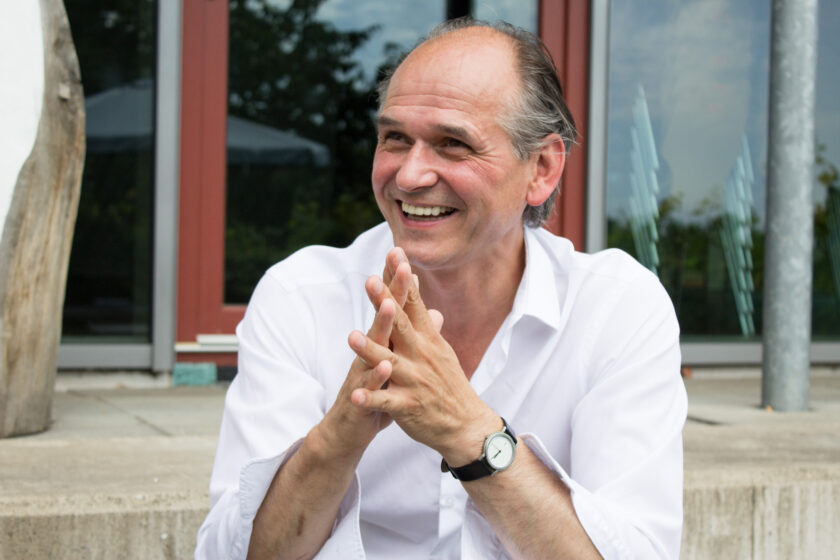
Architecture Builds the Future: Interview with Professor Marek Nowak
“Architecture Builds the Future”: that is the motto of the Day of Architecture 2022. Where do we stand today?
Almost 100 years ago, Le Corbusier formulated his new holistic concept of art and architecture in the spirit of the machine age with regard to the future of architecture: “A great age has begun. There is a new spirit. Industry is bringing us the new tools that are adapted to this new age.” At the time, enthusiasm for and confidence in industrial progress were immense. Its application opened up new technical possibilities for building in modern architecture.
Thanks to technological development and the use of new building materials, many visionary ideas for building concepts and urban development have been realized. The downside of this development is the severe burden on nature, its resources, and the resulting threat of climate catastrophe.
What does the architecture of the future look like?
The question of the future of architecture is clearly linked to issues of sustainable, ecological, and energy-efficient building, but also to questions of democracy and social cohesion for peace. The architecture of the future must be as diverse and open as the society that surrounds it, without sacrificing quality and aesthetics. Because quality means sustainability. In this way, and with the help of innovative building technology and materials, architecture must present new visions and sustainable solutions. In the future, a much more deeply rooted awareness of the connections between people, space, and the environment will be needed. This foundation of education in building culture should already be taught in our schools.
What are currently the greatest challenges for architects?
Balancing abstract, visionary thinking with pragmatic thinking and the concrete implementation of sustainable design concepts, including renewable building materials, will be the challenge for the architects of tomorrow—it requires courageous approaches and innovative processes. But this can only succeed if architects seize the opportunities available to them—and get involved in politics. Get engaged in society. Actively seek dialogue with citizens. Not only plan the city, but shape it holistically in the spirit of building culture. Through digitalization, architects will in future have the technical foundation to design across disciplines in order to enable sustainable and resource-efficient building and to create entirely new processes.
How do you prepare architecture students at Alanus University for these challenges?
At Alanus University, we rely on a holistic educational approach. The focus of the degree program is the unity of people and nature, as well as socially relevant and climate policy-related design topics. It is not just about a good idea and successful design—“design”: it is about holistic understanding and collaborative development. For an architecture for the generations to come.