Sustainable media education in forest kindergartens? Study surveys professionals and parents
21.12.2022 - What does media education look like in nature and forest kindergartens? Can children here also gain media education experience entirely without, or with only extremely sparing use of, tablets or computers? Might there even be added value here compared to a fully digitally equipped daycare center? The MünDig study report provides answers.
What does media education look like in nature and forest kindergartens? Can children here also gain media education experience entirely without, or with only extremely sparing use of, tablets or computers? Might there even be added value here compared to a fully digitally equipped daycare center? The MünDig study report provides answers.
The MünDig study report (Maturity & Digitalization) on nature and forest kindergartens, published in October, examines precisely these questions and reveals two things: on the one hand, that media education and nature pedagogy are an excellent match, and on the other hand, that there is still room for improvement.
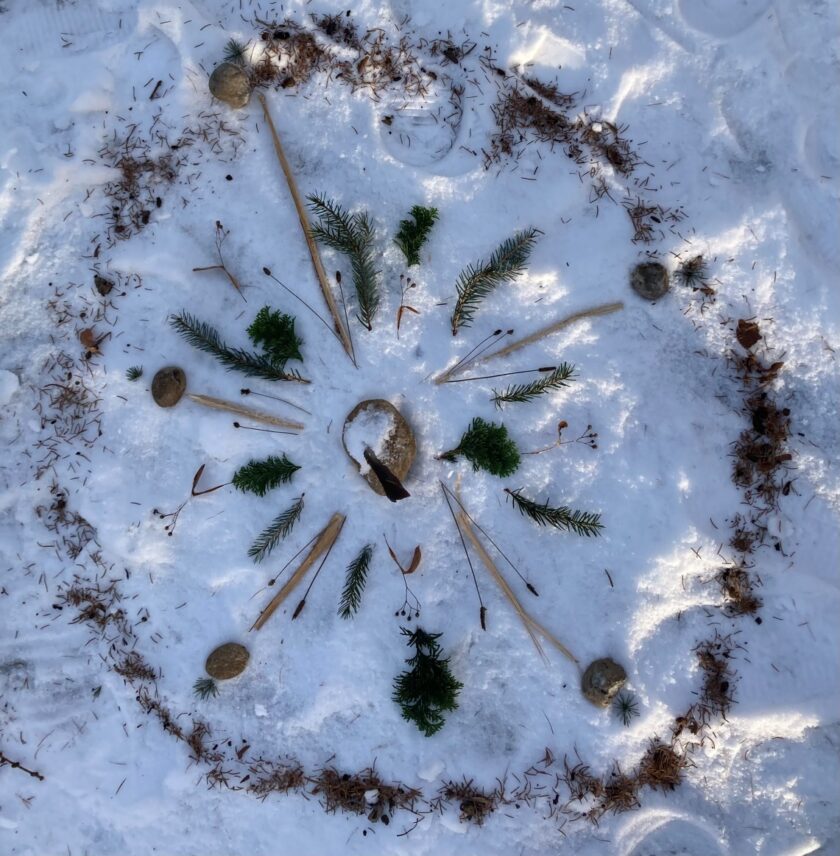
The nearly 170-page report addresses this from a theoretical perspective by comparing central aspects of nature and forest pedagogy with the fundamentals of broad-based media education and identifying overlaps. The empirical results of the survey also show that media education is very much part of everyday practice in nature and forest daycare centers—yet this happens only to a limited extent through the use of digital media. Rather, activities with analog media and—more broadly speaking—activities without the use of media “in the classical sense” are far more important in nature pedagogy. These can be important for media education and, for kindergarten age in terms of sustainably fostering media literacy, may even be more valuable than activities with digital media. The research team led by Prof. Paula Bleckmann illustrates this by contrasting activities, as shown here in an example from the competence area “Producing & Presenting”:
|
Activities with digital media |
Activities with analog media |
Activities without media in the “classical sense” |
|
Drawing a picture with a drawing app |
Coloring in a mandala |
Creating a “nature mandala” (land art, e.g. using sticks and stones) |
In the area of “Strengthening children in life to protect them from digital risks,” nature and forest kindergartens perform particularly well. First, the MünDig results show that, in the view of the surveyed parents and professionals, this area is of particularly high relevance. Second, a particularly large number of activities in this area are implemented in nature pedagogy practice. And third, parents are highly satisfied with the implementation of such activities.
The authors describe it this way: “When children spend time in the forest and in nature, they develop numerous skills almost incidentally that equip them well for life in the digitally shaped world of the 21st century.”