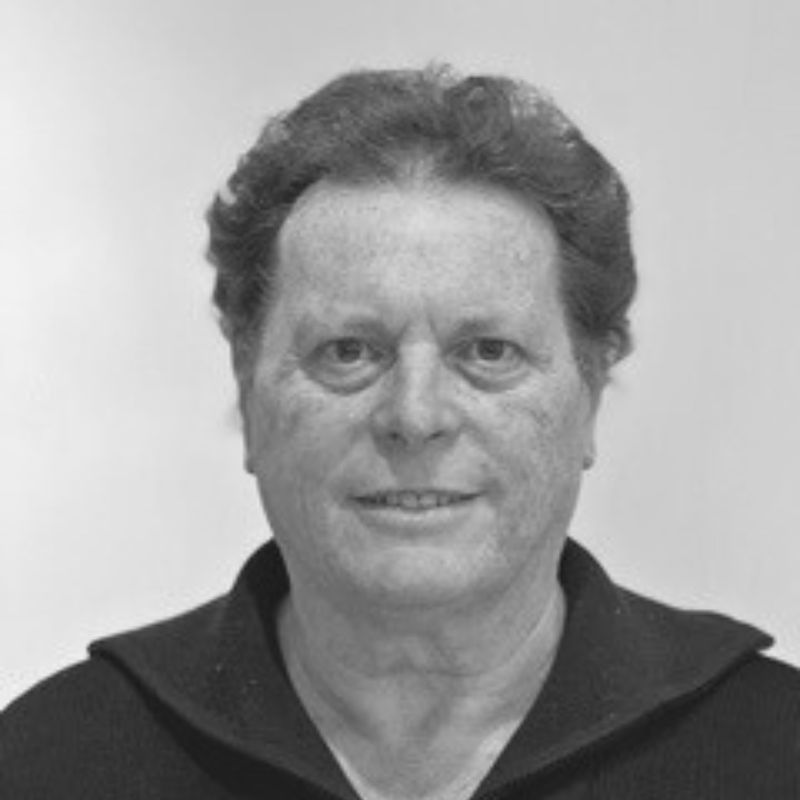
Dr. Martyn Rawson
Adjunct Professor of Waldorf Education in an International Context
Subject area: Educational Science, Childhood Education, Art and Waldorf Education / Department of Educational Science
Biography
Since 2025 // Adjunct Professor of Waldorf Education in an International Context
Since 2024 // Senior Research Fellow at Alanus University of Arts and Social Sciences
2019 to 2024 // Honorary Professor at National Tsing Hua University in Taiwan
Since 2018 // Upper school teacher at Christian Morgenstern School in Hamburg
2017 to 2018 // Teacher at Rudolf Steiner School Altona
Since 2016 Alumni Research Fellow at Plymouth University
Since 2016 // Lecturer in the master’s program at Waldorfseminar Kiel
2016 // Doctorate on the topic “Learning as becoming a subject in a Waldorf school: A hermeneutic phenomenological study” at Plymouth University, England.
2007 to 2016 // Teacher at FWS Elmshorn
2007 to 2010 // Master’s degree in Educational Research at Plymouth University
1994 to 2011 // Member of the College of the Pedagogical Section at the Goetheanum
Since 1993 // Visiting lecturer at the Freie Hochschule Stuttgart
1993 to 2003 // Head of School, Michael Hall School, England
1979 to 1987 // Teacher at York Steiner School, England
1973 to 1976 // Studied English Literature & History at York University, England
Born in 1954 in Glasgow (Scotland)
Publications
Monographs and edited volumes
Boland, N., Hsueh, H., Rawson, M., & Williams, L. (2024). Decolonizing Through Waldorf Education: Perspectives (N. Boland, H. Hsueh, M. Rawson, & L. Williams, Eds.). Elewa (e-learningwaldorf).
Clouder, C., & Rawson, M. (2003). Waldorf Education. Floris Books.
Rawson , M. (2001). Free Your Child’s True Potential. Hodder & Stoughton.
Rawson, M. (2003). The Spirit in Human Evolution. AWSNA Publications.
Rawson, M. (2021). Steiner Waldorf Pedagogy in Schools . A critical introduction. Routledge. (Translations into Dutch, Finnish, Chinese)
Rawson, M., & Avison, K. (2013). Towards Creative Teaching. Notes to an evolving curriculum for Steiner Waldorf class teachers. Floris Books.
Rawson , M., & Lutzker , P. (2002). Language and Learning. Steiner Waldorf Schools Fellowship Publication.
Rawson, M., & Richter, T. (2000). The Educational Tasks and Content of the Steiner Waldorf Curriculum. Steiner Schools Fellowship Publications
Rawson, M., Richter, T., & Avison , K. (2014). The Tasks and Content of the Steiner-Waldorf Curriculum (2nd Edition ed.). Floris Books.
Rawson, M., & Rose, M. (2003). Ready to Learn: From birth to school readiness. Hawthorn Press.
Rawson, M., & Stöckli, T. (2003). Work and Learning in the 21st Century: Meeting the challenge of life-long learning in school and in the workplace. Steiner Waldorf Schools Fellowship Publications.
Rawson, M., & Stöckli, T. (2007). Praxisforschung in der Waldorfschule: Ein Reader (Practice-based research in Waldorf schools). ipf Publications.
Rawson, M., & Steinwachs, F. (Eds.). (2024). Waldorfschule, Globalisierung und Postkolonialismus- Versuch einer Annäherung. Beltz.
Academic articles
Rawson, M., Hsueh, H., Cherng, H. (2025). An Inquiry into Waldorf Teachers‘ Localization of the Curriculum: Practice, Reflection, and Dialogue. RoSE – Research on Steiner Education, Vol 16(1).
Rawson, M. (2025). Types of discourses about Anthroposophy in relation to Waldorf education (Part 1). RoSE – Research on Steiner Education, Vol 16(1).
Rawson, M. (2025). Embodied Learning. Transforming potentialities into holistic skills through different modes of experience. In K. Nigh (Ed.), Holistic Education. Enduring principles and practice (Vol. 2). Information Age Publishing.
Rawson, M. (2024). Learning capacities for a multicultural and diverse social world: a challenge for Waldorf schools. WaldorfWorkingPapers, 9. https://e-learningwaldorf.de/wp-content/uploads/2023/08/No-9-Learning-capacities-for-a-multicultural-and-diverse-social-world.pdf
Rawson, M. (2024). Types of discourses about Anthroposophy in relation to Waldorf education. WaldorfWorkingPapers. https://e-learningwaldorf.de/wp-content/uploads/2024/09/No.-8.2-Types-of-discourses-about-Anthroposophy-in-relation-to-Waldorf-education.pdf
Rawson, M. (2024). Translating, transmitting and transforming Waldorf curricula: one hundred years after the first published curriculum in 1925. Frontiers in Education, 9-2024. https://doi.org/ doi: 10.3389/feduc.2024.1306092
Rawson, M. (2023). Working with postcolonial literature as a learning opportunity for the development of the young person. Humanising Language Teaching, 25(2). https://www.hltmag.co.uk/apr23/working-with-postcolonial-literature
Rawson, M. (2023). Project work in English lessons.- Existential questions, genuine engagement, and self-efficacious learning. In S. Speckenbach & P. Lutzker (Eds.), Künstlerischer Fremdsprachenunterricht. Impulse aus der Waldorfpädagogik. Pädagogische Forschungsstelle beim Bund der freien Waldorfschulen.
Rawson, M. (2022). Decolonization of the curriculum as a path of learning. Journal für Waldorfpädagogik, 4.
Rawson, M. (2022). Blended Learning in Steiner Waldorf Schools. SchoolEducationGateway. https://www.schooleducationgateway.eu/en/pub/viewpoints/experts/blended-steiner-waldorf.htm
Rawson, M. (2022). The gappiness of Shakespeare: Performative possibilities. Scenario: Journal for Performative Teaching, Learning, Research, 16(1). https://journals.ucc.ie/index.php/scenario/issue/view/scenario-16-1
Rawson, M. (2022). L2 teaching and learning in Waldorf schools- why performative? Scenario: Journal for Performative Teaching, Learning, Research, XII(2).
Rawson, M. (2022). Steiner Waldorf Teacher Education. In R. C. Collister (Ed.), Holistic teacher education: In search of a curriculum for troubled times (pp. 54-73). Cambridge Scholars Publishing.
Rawson, M. (2021). Postcolonialism – a topic relevant to becoming a self. In A. Wiehl & F. Steinwachs (Eds.), Studienbuch Waldorf-Jugendpädagogik (pp. 203- 216). Verlag Julius Klinkhardt.
Rawson, M. (2021). A new approach to curriculum development. Erzeihungskunst, online(October 2021). https://www.erziehungskunst.de/artikel/aus-der-forschung/ein-neuer-ansatz-fuer-die-lehrplanentwicklung/
Rawson, M. (2021). A Theory of Waldorf Teacher Education. Part 3. Learning knowledgeable action with purpose through learning-in-practice. Research on Steiner Education, 12(2), 1-12.
Rawson, M. (2021). Glossary. Assessment. In M. Domokos (Ed.), assessment as Dialogue. Twenty inspiring practices from classrooms across Europe (pp. 33-39). European Union Erasmus Programme, European Council of Steiner Waldorf Education, Learning for Well-being Foundation, Hungarian Waldorf Association.
Rawson, M. (2021). Subjectification and Resonance in Late Modern Bildung: The Global Model of Waldorf Education. Tsinghua Journal of Education, 37(4). https://doi.org/DOI: 10.6869/THJER.202112_37(2).0002
Rawson, M. (2021). Waldorf education and postcolonialism: a critical self-reflection. Journal für Waldorfpädagogik, 2(March), 94-97.
Rawson, M. (2021). Waldorf education and postcolonialism: a critical reflection. Journal für Waldorfpädagogik, 2, 89-93.
Rawson, M. (2021). Using artistic, phenomenological and hermeneutic reflective practices in Waldorf (Steiner) teacher education. Tsing Hua Journal of Educational Research, 37(1), 125-162. http://edujou.site.nthu.edu.tw/var/file/128/1128/img/1172/37-1-4.pdf
Rawson, M. (2021). Waldorf education and postmodern spirituality. In A. Wiehl & T. Stoltz (Eds.), Education-Spirituality-Creativity: Reflections on Waldorf Education (pp. 55-72). VS Verlag für Sozialwissenschaft Springer. https://doi.org/10.1007/978-3-658-32968-6
Rawson, M. (2021). Spirituality and subjectivity in Waldorf (Steiner) education: a postmodern Bildung perspective. International Journal of Children’s Spirituality, 26(1/2), 24-43.
Rawson, M. (2021). A forgotten German philosopher: a self-critical reflection by a high school teacher on Black Lives Matter. Waldorf Research Bulletin 26(1).
Rawson, M. (2020). A Theory of Waldorf Education: Part 2. The role of study and artistic exercises. Research on Steiner Education, 11(2), 23-36.
Rawson, M. (2020). A theory of Waldorf teacher education. Part 1. Learning dispositions. Research on Steiner Education, 11(1), 1-22.
Rawson, M. (2019). Seven learning processes: A contribution to Waldorf learning theory. Leherrundbrief, 108, 110-117.
Rawson, M. (2019). The Development of the Person: Subjectification and Possible Links to Non-formal Learning Situations and Expansive Learning in Waldorf (Steiner) education. Other Education Journal, 8(2), 2-25.
Rawson, M. (2019). A complementary theory of learning in Waldorf pedagogical practice. Research on Steiner Education, 9(2), 1-23.
Rawson, M. (2018). The case for illuminative practitioner research in Steiner Education. Research on Steiner Education, 8(2), 15-32.
Rawson , M. (2018). Learning as participation in communities of practice: Second part of a research project. Seelenpflege in Heilpädagogik und Sozialtherapie, 2018(1), 22-39.
Rawson , M. (2018). Using a constructionist reading of Steiner’s epistemology in Waldorf pedagogy. Research on Steiner Education, 8(2), 33-50.
Rawson , M. (2018). Life processes and learning in Waldorf pedagogy. Research Bulletin for Waldorf Education, XV111(2).
Rawson, M. (2017). The case for practitioner research using complementary theory in Waldorf pedagogy. Research on Steiner Education, 9(2), 1-23.
Rawson, M. (2016). Assessment for learning, a Waldorf perspective. Lehrerrundbrief, 104, 259-277.
Rawson, M. (2016). Expansive or defensive learning? SSC as a counter-practice: initial experiences (Expansive or defensive learning:SSC as counter practice: first experiences). Lehrerrundbrief, 105, 119-135.
Rawson, M. (2016). Assessment for learning, a Waldorf perspective. Lehrerrundbrief, 104, 259-277.
Rawson, M. (2014). Practices of teacher learning in Waldorf schools: some recommendations based on qualitative inquiry. Other Education: The Journal of Educational Alternatives, 3(2), 45-68.
Other publications
Sievers , U., & Rawson, M. (2024). Epoch notebooks, binders and portfolios- learning in the upper school. In C. Becker & A. Wiehl (Eds.), Epochenhefte. Theorie und Praxis eines Bildungsmediums. Beltz Juventa.
Sievers , U., & Rawson, M. (2014). From we to I and back again. Differentiation requires a stable class community. Erzeihungskunst(March). https://www.erziehungskunst.de/artikel/leistung/vom-wir-zum-ich-und-wieder-zurueck-differenzierung-braucht-stabile-klassengemeinschaften/